People That Know Child Abuse
We know that the punishment model does not facilitate healing or learning – It is responsible for most failed grade level reading, math and history scores. It is a primary reason for underperforming schools.
Child welfare systems across the country are facing a deepening placement crisis. As group homes, residential treatment centers, and detention beds have closed without real alternatives, older youth with high-intensity behavioral and developmental needs are being warehoused in hotels, emergency rooms, and psychiatric hospitals. KARA presents Judith Schagrin’s essential article on how we got here and why policymakers must rethink residential care, remedy the unintended consequences of the Family First Prevention Services Act, and build safe, humane options for children who cannot live at home.
Psychiatrists can help abused and neglected children even when specialty care is scarce by using trauma-informed care, safer prescribing, community partnerships, and advocacy
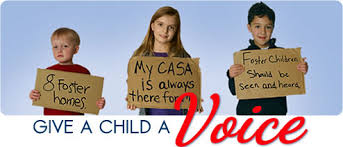
CASA Guardian ad Litem volunteers stand beside abused and neglected children in court, offering time, continuity, and a purely child focused voice. Here, CASAs explain their role in their own words, and we outline how you can explore becoming a CASA volunteer yourself.
Project 2025 and allied budget plans would slash or eliminate programs that children rely on for health care, nutrition, early childhood education, civil rights protections, and child welfare support. KARA summarizes CWLA and other advocates’ warnings, shows how child poverty and hunger are already rising, and urges you to share this information and call your lawmakers before more supports for kids disappear.
Most CPS reporting gives lawmakers only snapshots: how many kids are in care today, how many reports this year. KARA argues that counties must keep de identified, family level longitudinal records so legislators can see multi generational involvement, understand which interventions reduce repeat removals, and design policies that break cycles of trauma instead of just managing them case by case, year by year.
Minnesota’s new Supreme Court Council on Child Protection and Maltreatment Prevention is building a statewide blueprint to prevent child abuse and improve how the system works for families once they’re involved. Safe Passage helped launch this effort and is now tracking early reforms from Family Resource Centers to better training, legal representation, and foster youth supports and highlighting ways stakeholders can give input.
Mandated reporters: teachers, clinicians, social workers, childcare staff, clergy and others are often the only adults who see the hidden signs of child abuse and neglect. This article explains what mandated reporters can do: recognize red flags, act on reasonable suspicion, report and document clearly, push past institutional pressure, and stay emotionally supported while protecting children.
School boards decide whether schools become trauma informed, healing environments or systems that deepen harm. This chapter explains what boards can do: make trauma and child safety central to district strategy, fund early identification and support services, reshape policing and discipline around healing and equity, protect relationship-based learning, and demand transparent, equity focused metrics and community partnerships so vulnerable students are seen, supported, and able to succeed.
Jerry Lee Lewis marrying 13‑year‑old Myra Brown isn’t just a strange story from the past. Child marriage is still legal in most U.S. states, creating America child brides whose trauma and rights we pretend not to see.
When child protection systems worship efficiency, children lose. Ned’s metaphor and KARA’s data reveal how underfunded CASAs and overloaded workers leave abused kids without a voice in court or in their own life.
This KARA article revisits the Rana Plaza factory collapse through the eyes of child workers and victims’ children, showing how weak corporate responsibility scars young lives long after the rubble is cleared.
KARA Conversations brings experienced child advocacy speakers to your classroom, congregation, nonprofit or civic group for short, powerful Zoom sessions on child abuse, childhood trauma and how Child Protective Services really works. Choose a 30 minute overview with Q&A or a customized 60 minute event, and help the people where you live move from concern to concrete action for children.
An investigative report from Pennsylvania’s TribLive found that nearly 30% of 845 child deaths and near-deaths from 2018–2022 were tied to parental drug use—often in families already known to Child Protective Services. Similar patterns are emerging in Minnesota, Allegheny County and other states. This KARA article shares real children’s stories, shows how CPS and child-fatality systems are failing to track the true scale of drug-related child deaths, and calls on adults everywhere to demand better data, oversight and protection.
Global value chains and fast‑fashion business models do not just “reflect” child labour in countries like Bangladesh – they help design it into the system. Research by Eshanee Singh, Michael Nielsen and the CLARISSA programme shows how multinational buyers, through relentless pressure for lower prices and faster production, push risks and costs down onto informal workshops and necessity‑driven family businesses, where employing children often becomes the only way to survive. Instead of treating child labour as a distant cultural problem, this work makes clear that it is a predictable outcome of corporate decisions in boardrooms and purchasing offices, and that real change will come only when citizens, consumers and investors demand supply chains that value children’s lives more than shareholders’ dividends.
Child Protective Services is one of the least understood and least transparent systems we fund, even though childhood trauma drives enormous costs in education, health care, crime, and prisons. This KARA article argues that taxpayers, children, and communities are all paying for our blind spots around CPS, shows how negative narratives and politics are pushing the system into crisis, and calls on readers to demand real data and trauma-informed reform.
Arizona rebuilt its child welfare agency in 2014 after 6,554 child abuse reports were marked “not investigated,” but new audits, deaths, and lawsuits show the same failure patterns emerging under a different name. This KARA deep dive consolidates Arizona’s own data, fatality reviews, and court records to expose how delays, documentation gaps, group home overreliance, and chronic turnover are still putting children at risk—and what that means for real reform.
The Alaska Children’s Alliance warns that Alaska has “some of the highest rates of child abuse and neglect in the nation,” noting research that 38% of children born in Alaska will be reported to child welfare before age 10 and nearly 1 in 7 will face an allegation of sexual abuse before age 12
Child labour in Bangladesh remains widespread, especially in the informal economy and leather industry, where children work extreme hours in toxic, hazardous conditions for less than US$2 a day. Drawing on a 2024 UNICEF report, a five year CLARISSA study, and a foundational ILO assessment of push and pull factors, this post explains why Bangladesh is a child labour hot spot and how poverty, poor health, and employer demand keep children trapped in dangerous work instead of school.
Excerpt
Child labour in Bangladesh has not disappeared—it has shifted into the informal economy, where children work long hours in toxic, unsafe conditions for very low pay. A 2024 UNICEF report shows that child labour rates remain significantly high, while a five year CLARISSA study reveals that 27% of workers in small leather enterprises are children handling chemicals, heavy loads, and dangerous machinery.
This post also revisits a key 1997 ILO assessment of push and pull factors that explains why poverty, poor health, disaster, and employer demand continue to drive children into hazardous work instead of school. Together, these findings show why Bangladesh remains a hot spot for child labour and why solutions must address both household poverty and the structure of informal labour markets.
A federal “bonfire of deregulation” and plans to erase “neglect” from child protection law are quietly dismantling Child Protective Services in America. Backed by the president and his base, these policies weaken legal protections, strip away thousands of pages of guidance, hide crucial government information, and slash funding—placing at‑risk children and families in even greater danger.
KARA’s Children’s Freedom Crusade uses a Fourth of July freedom theme to demand real life, liberty, and happiness for abused and neglected children—and to build a national, child first movement that puts their safety and healing first.
Using KARA’s friend Ned’s “backwards car” analogy, this post explains how Child Protective Services is structured to protect its own bureaucracy rather than children. Conflicts of interest, secrecy, and missing metrics mean CPS often produces what it was designed to stop. The fix starts with transparency and informed legislators.
This article uses NCANDS data to identify the best and worst states for very young children in CPS, highlighting where infants and toddlers face the greatest risk of severe harm or death and how troubled, overwhelmed child protection systems are struggling with heavy caseloads and too few resources. It points lawmakers, advocates, and communities toward more transparent CPS reporting, stronger early childhood support, and data driven reforms that can actually protect kids and support families.
This is one of the 88 stories of children dying at the hands of their caregivers reported in the recent Safe Passage For Children investigation of child death in Minnesota. The report suggests why this tragedy is happening in our state and how we can make life safer for at risk children (in the read more at the end of the article). Lylah Koob, Goodhue County
Child Abuse and Child Protection Stories & Statistics Arizona & Arkansas
Josh and Maya share a powerful story of a young boy on the brink of being locked up, not because he was dangerous, but because the system lacked transparency
Child abuse in the home is still too often treated as a private family issue instead of a crime. Drawing on years as a CASA guardian ad Litem, this post exposes how Child Protective Services keeps abuse hidden, why children have no standing in court, and what must change so kids are truly safe in their own homes.
Foster care and group homes are supposed to protect our most troubled children, but for many they become another source of trauma. Youth in care face unstable placements, high rates of mental illness, overrepresentation in group homes, and far greater odds of homelessness, exploitation, and incarceration when they age out.
Sexual abuse of a child is rarely a single “incident” or the act of a stranger in the dark; for many children, it is years of rape by the caregivers who are supposed to protect them. Most child sex abuse occurs in the home. This CASA Guardian ad Litem has experience two four-year-olds coming into…
Child abuse in the United States is not rare or random — it is the predictable outcome of policy choices. In 2023, about 546,000 children were confirmed victims of abuse or neglect and an estimated 2,000 were killed, roughly five children every day. Most are hurt by their own parents, often after prior contact with Child Protective Services. These numbers vary wildly by state, proving that our systems can choose to protect children — or not.
Minnesota’s Guardian ad Litem and CASA program has been under real strain—lost volunteers, rising caseloads, and stressed systems have put vulnerable children at risk. Alex Miller’s Minnesota CASA leadership as Chief Information Officer and Interim Program Administrator is helping move the program from crisis toward recovery. By modernizing technology, strengthening data security, and working transparently with the State Guardian ad Litem Board, he has helped stabilize turnover and rebuild trust. The result is a system that is slowly regaining its footing and putting more trained, supported advocates in the lives of abused and neglected children.
Kids at Risk Action, hosts Alex and Jordan explore the profound impact of Adverse Childhood Experiences (ACEs) and how childhood trauma can affect individuals throughout their lives, much like PTSD in veterans.
Compared to other government expenditures, early childhood programs are uniquely cost-effective. K–12 education spends ~$15,000/student annually with diminishing returns; prison systems cost $40,000/inmate yearly with high recidivism. Meanwhile, early childhood interventions like Head Start save $4.8B–$16.1B per
Official child welfare numbers may capture only part of the crisis. This analysis explains how poverty, Family Assessment practices, underreporting, misreporting, and weak transparency can hide the true scale of harm to children—and why future projections must account for what the system fails to record.
Very young children are showing up in emergency rooms after suicide attempts and self‑harm, often with histories of abuse, neglect, and other trauma. When CPS and lawmakers lack transparent, child‑outcome data and trauma‑focused resources, these children slip through the cracks until it is too late.
dive into the “ground truth” of the foster care system — exposing the often-unseen hardships children face even after being placed in protective care. Through heartbreaking stories like Alex’s and alarming statistics on abuse
There is no shortage of well-meaning volunteers and workers dedicated to improving the lives of the children they are serving as teachers, Guardians ad Litem, social & healthcare workers, law enforcement and adoptive/foster parents.
Child abuse redefines the way a child thinks and sees the world. Abused children have severely limited learning and coping skills. An abused child’s mental development has been arrested by an anxiety and fear that supercede the learning of other personal and social skills. Without personal and social skills, and a lessening of the anxieties and fears, Abused children fail at school, don’t make friends, and keep a terribly low self image.
the harsh realities facing foster youth aging out of the system and the failures of Extended Foster Care (EFC) programs
This deep dive expands on KARA’s child welfare crisis post by walking through five Northeastern University capstone projects. Together, they use national data, infant mortality models, county level forecasting, and poverty analysis to show where children are most at risk—and how KARA AND YOU can use this research to drive policy change.
There is an underappreciated reality that Child Protective Services is the only safe haven for children living with rape, violence and neglect as they are too young to defend themselves.
American Fosters are struggling. These reports from around the nation indicate a great need for more help for at risk families and safe homes for children unlucky enough to be born into toxic homes.
Contrary to a common assumption, neglect is not less damaging than abuse. Research shows neglect victims have lifelong problems because they miss developmental milestones around language, self-control, and bonding with others.
A constant dilemma in neglect cases is whether to traumatize children by removing them from their families, or leave them in situations where their brains aren’t developing normally.
Quality Early Childhood Education (ECE) programs can make it possible to leave children at home while helping their parents improve parenting skills.
This study documents that neglect victims who got ECE moved quickly from having a language deficit to the normal range. Language development is critical to academic success and positive interpersonal relationships.
ECE can help many children avoid foster care and still obtain the baseline skills they need to thrive.
Join the Discussion on Facebook
Make a difference for the children of Minnesota today,
Donate Here!
Adverse Childhood Experiences (ACEs) are not just difficult memories—they’re powerful risk factors that shape how a child’s brain and body develop across a lifetime. In this Kids at Risk Action podcast, hosts Alex and Jordan explore how abuse, neglect, domestic violence, and other ACEs can lead to PTSD like symptoms, chronic stress, and higher risks of mental illness, addiction, and early death. They connect these experiences to systemic gaps in child welfare, schools, and health care, where children too often receive help only after they are in crisis instead of when early warning signs appear. The episode calls for trauma informed care, ACEs screening, and policy changes that fund prevention and resilience building, urging listeners to advocate for better support and a more compassionate, proactive approach to child welfare.
Adverse Childhood Experiences (ACEs) are not just bad memories—they are powerful risk factors that change how a child’s brain and body develop. In this Kids at Risk Action podcast episode, hosts Alex and Jordan explore how ACEs like abuse, neglect, and domestic violence can lead to PTSD like symptoms, chronic stress, and higher risks of mental illness, addiction, and early death. They connect the dots between ACEs and the systems that are supposed to help: child protection, schools, health care, and juvenile justice. Too often, children only get attention after they are failing, acting out, or in crisis, rather than receiving trauma informed support early. This episode calls for ACEs screening, early intervention, and policies that fund prevention, resilience building, and compassionate care—so children are not punished for symptoms of trauma but helped to heal and thrive.
Across the country, children’s lifelines are being quietly dismantled. Federal budget cuts and Project 2025–aligned proposals are targeting Medicaid and CHIP, SNAP and school meals, Head Start, child care, disability supports, civil rights protections, and even child abuse prevention and CASA programs. These changes will deepen child poverty and hunger, push more families into crisis, and “decimate the human services field,” according to the Child Welfare League of America. This post pulls together sources on what’s being cut, who is most at risk—especially immigrant, disabled, and LGBTQ+ children—and how you can call your elected officials and demand that child serving programs be protected, not eliminated.
Child abuse and prosecution in Texas tell a complex story that goes far beyond headline grabbing stings. Operation Soteria Shield rescued more than 100 children and led to over 200 arrests in a major FBI led crackdown on online child exploitation, while new state laws now require Texas schools to report educator misconduct and abuse more rigorously. At the same time, federal investigators have found unconstitutional conditions across Texas juvenile justice facilities, including sexual abuse, excessive force, and prolonged isolation, and judges have called the state’s use of psychotropic medications on foster youth “appalling,” with many children prescribed multiple powerful drugs without adequate oversight. Rising youth violence, racial disparities in child welfare and school discipline, and a documented child to prison pipeline mean that prosecution alone cannot keep children safe. This KARA report brings together data and sources on child abuse cases, foster care failures, juvenile justice, mental health, and recent legal reforms in Texas—and calls for trauma informed services, diversion programs, and stronger accountability to truly protect vulnerable children instead of merely reacting after the harm is done.
Foster parenting is about much more than providing a bed. This guide shows caregivers how to insist on full trauma histories, document key events, advocate against medication only approaches, partner with schools and agencies, and use their lived experience to reform systems and transform children’s lives.
Isabella was taken into foster care when her birth home was raided by authorities for possession of drugs. She was found locked in a room by herself. She was silent – never spoke. Isabella had never been outside until she was placed into foster care at 7.
“As child protection rules are rolled back, a new kind of child neglect threatens millions of at‑risk children. Read what these changes mean and how to respond.”