Archive for the 'Kids At Risk Action (KARA)' Category

Kids At Risk Action’s YouTube Video Channel

Kids At Risk Action (KARA) has posted videos on our YouTube Channel of the 2008 KARA Forum held at Century College. To view more videos of our events, visit our page at YouTube: http://www.youtube.com/kidsatriskaction.

Here is a sample of the 2008 Kids At Risk Action (KARA) Forum:


Have something to add?

Got a different point of view, want to play devil’s advocate, or just think we’re all wet? Post your experiences or examples.   If you think  someone might appreciate this information,  press the share button below..

Fundraiser and Rummage Sale to benefit Kids at Risk Action


rummagec2

The first annual Rummage Sale and Silent Auction for Kids at Risk Action will be held in Apple Valley, MN on May 16th, 2009.  New, gently used items, food and fun at the first event open to the public. The event starting at 9 AM will be held at:

14767 Dundee Avenue
Apple Valley, MN 55124

Some of the items currently in the rummage sale:

  • cook books,signed by the author
  • Let’s Dish basket
  • tandem bike
  • Pampered Chef
  • Custom jewelry
  • household items
  • baby items 
  • bird houses
  • State Fair award winning rag rugs
  • hotdog, brats and other refreshments

If you have any items you would like to donate to our sale, please contact Melissa/Kids At Risk Action by May 9th.  Any items not sold on the 16th, will be donated to Lewis House and Dakota Woodlands, shelter and organization that helps battered women and their children.


Have something to add?

Got a different point of view, want to play devil’s advocate, or just think we’re all wet? Post your experiences or examples.   If you think  someone might appreciate this information,  press the share button below..

A Grim Truth About Big Pharma

Preventive Psychiatry E-Newsletter # 237


Michigan Lawsuit Uncovers Psychiatry’s Dark Secret:

Psychiatric Drug-Induced Movement Disorders in Young Children

by Ben Hansen – From the Spring 2007 newsletter of the International Center for the Study of Psychiatry and Psychology ( www.icspp.org).

Last month the New York Times exposed yet another example of unethical marketing practices by pharmaceutical giant Eli Lilly. The front page story, In Some States, Maker Oversees Use of Its Drug, focused on Lilly’s efforts to coerce Medicaid officials into placing Zyprexa on preferred drug lists in at least 25 states. Eli Lilly was caught in broad daylight with its hands in the “Medicaid cookie jar,” yet the story behind the scenes is deeper than that.

For over a year I’ve been investigating Eli Lilly’s subversion of Michigan’s Medicaid program, and through a Freedom of Information Act lawsuit I obtained nearly a thousand pages of documents showing how Medicaid is being milked like a huge cash cow by the pharmaceutical industry. In July 2006 I alerted the New York Times to Lilly’s antics in Michigan. I provided several key documents and solid leads to the reporter covering the story, Stephanie Saul. Overall I was pleased by the way Ms. Saul reported the Lilly/Medicaid scandal, but there’s another part of the story the Times didn’t mention.

The purpose of my FOIA lawsuit in Michigan is not simply to embarrass one pharmaceutical manufacturer — my aim is to gain access to data that will blow the lid off the entire psychiatric drug industry. This may be why the State of Michigan has fought me every step of the way, beginning with my first FOIA request in November 2005. Instead of joining my attempt to shed light on Michigan’s corrupt Medicaid system, the state attorney general’s office has tried to block the release of the documents I’ve requested, even filing a motion to have my lawsuit thrown out of court.

Thankfully, a respected attorney has taken my case pro bono, and we’re mapping a strategy to outmaneuver our opponents. The lawsuit, “Ben Hansen vs. State of Michigan Department of Community Health,” boils down to a fight over the release of records that show a list of each patient’s psychotropic drugs by drug NAME, not just by drug CLASS. For example, we know at least one Michigan Medicaid patient is currently on a total of 17 different psychiatric drugs, but the State of Michigan doesn’t want us to know the names of the drugs in the 17-drug cocktail!

By the time the next ICSPP newsletter is published, I hope to report a successful outcome to this ongoing legal battle. For now I wish to share a sampling of the psychiatric prescribing data I’ve obtained so far. The numbers speak for themselves.

During a 10-month period from January 2006 to October 2006, Michigan Medicaid statistics show:

100% increase in children under age 18 on 3 or more “mood stabilizers”.

100% increase in children age 6-17 on 4 or more psychiatric drugs.

79% increase in adults on 5 or more psychiatric drugs.

67% increase in adults on 3 or more psychiatric drugs.

49% increase in adults on 2 or more insomnia agents.

45% increase in children under age 18 on a benzodiazepine for at least 60 days.

45% increase in children under age 18 on 2 or more antipsychotics.

According to Michigan Medicaid records from 2005, the top 5 psychiatric drug classes prescribed to children under 5 years old were:

1. Anxiolytics/Sedative Hypnotics (1,265 patients under age 5).

2. Antidyskinetics (972 patients under age 5).

3. Anticonvulsants/Mood Stabilizers (933 patients under age 5).

4. Sympathomimetics/Stimulants (408 patients under age 5).

5. Atypical Antipsychotics (322 patients under age 5).

The most recent data on children under age 5, from February to December 2005, shows a 100% increase in children under 5 prescribed antidyskinetics (also called antiparkinsonians) for movement disorders such as dystonia, dyskinesia, tics, and tremors. This is perhaps the most disturbing statistic I’ve uncovered so far. If the same trend continued through 2006, it would mean the prescribing of antidyskinetics to children under 5 years old has quadrupled in the last two years!

If the increased prescribing of antidyskinetics is the direct result of an increase in the diagnosis and treatment of “mental disorders” in American toddlers, then we could be witnessing a public health disaster of monumental proportions. Drug-induced movement disorders in very young children are increasing at an astonishing rate, yet little if any mention of this is reported in the news. Certainly this is not something the pharmaceutical industry and its servant, the American Psychiatric Association, wishes to see publicized. It is the urgent task of organizations like ICSPP to uncover this dark secret and shine a light on it for the world to see. Ben Hansen is a psychiatric survivor and activist who serves on the Michigan Department of Community Health Recipient Rights Advisory Committee. A member of ICSPP and co-founder of MindFreedom Michigan, Ben is also founder and president of the wickedly satirical Bonkers Institute for Nearly Genuine Research. Visit his brilliant web site: www.bonkersinstitute.org

Dr. Bruce Perry, makes the prediction that unless this nation addresses the exponential growth in the problems of at risk children and their families, within this generation we will approach twenty five percent of our entire population qualifying as “special needs”.


Have something to add?

Got a different point of view, want to play devil’s advocate, or just think we’re all wet? Post your experiences or examples.   If you think  someone might appreciate this information,  press the share button below.

KARA Action Group Manifesto For Early Childhood Education

Early Childhood Education Manifesto


Early Childhood Education

Manifesto


Education is the engine of progress and prosperity.  No nation can achieve its potential for greatness without investing in its human capital.  The extent to which children successfully negotiate the treacherous passage to adulthood depends on the earliest years of brain and emotional development.  That explains why early childhood education is crucial to society.     


America’s current public policy regarding at-risk children is an economic and moral failure:

“We reject community investment programs (implemented today by nearly all developed countries) that stress preventing the creation of at-risk children.  Instead we assume colossal costs of corrective measures that mostly fail regardless of how earnestly they are pursued.” 


The results of this undocumented policy are many:


1. A child is a work-in-process toward citizenship.  A successful citizen adds $5 million of economic value to society in his/her life.  If unsuccessful, that person instead costs society several million dollars in expenses.  Therefore, the lost opportunity value between a success and a failure is somewhere between $5 and $10 million per child.  


2. Young children are humiliated when they read below grade level.  A wealthy society that rejects proven programs to avoid the humiliation of children is an immoral society.


3. Children who read by the third grade seldom are ever involved with the criminal justice system.  Four of five incarcerated juvenile offenders read two years or more below grade, and a majority are functionally illiterate.


4. America has over two million prison inmates, the highest rate in the world and five to ten times that of European countries.  Another five million Americans are involved in the criminal justice system for probation, parole, or supervision, all unproductive activities.  


5. Several states forecast needed prison growth based on third grade reading scores.   Our federal prisons are operating at 130% of capacity. 


6. No industrial nation equals the United States in neglecting the basic needs of working families with children.


7. Minnesota’s under funded policy to assist low-income families for out of home child care has a waiting list of over 7000 families.  This is a sham, not real policy.


When America isn’t fair, it doesn’t work.  America is cheating its children.


High quality, universally eligible early childhood education and development similar to that now in place for decades elsewhere would solve the above problems.  According to Minneapolis Federal Reserve researchers, no public sector investment of taxpayer money yields the high returns verified for early childhood education.


What are we waiting for?  

Supporting Documentation 


1. The $5 million lifetime per citizen contribution to America’s society is cited by author Jared Diamond in Collapse: How Societies Choose to Fail or Succeed, page 504.


2. In his key-note speech at the Capitol on January 28, 2009, David Lawrence referred to young children who sense failure when unable to read like their classmates.  This is equivalent to humiliation.  Policy makers cannot pretend to be ignorant of brain development enhancing early childhood programs.  The literature is full of relevant information and it is easy to find. Mr. Lawrence is president of The Early Childhood Foundation at the University of Florida.  Prior to that he was publisher of the Miami Herald.    


3. The correlation between reading deficiency and interaction with criminal justice is provided by David Lawrence in his key-note speech cited in number 2 above.


4. Prison population report by “Pew Center on the States”, Pew Charitable Trust.


5. Several states including California and Arizona use early grade test scores to assist in forecasting required prison capacity growth.  Corrections Digest, April 12, 2002 reports Federal Prisons are 131% of design capacity.


6. Among the programs common in peer industrial countries are 1) income of full-time employment provides families above-poverty living standard, 2) universal housing for all families with children, 3) universal health care, 4) paid maternity and parental leave for both parents with guarantee of return to previous job, 5) women’s guaranteed right to breastfeed at work, 6) universal pre-school child care and development, 7) guaranteed sick leave for illness and family care, 8) minimum of 5 to 6 weeks of paid vacation, 9) taxpayer paid college tuition for qualifying  students, 10) protection of children from predatory marketing by consumer product companies.  None of these programs exist in the United States.  


7. Minneapolis Star Tribune, “Day Care? Cut”, February 13, 2009, page 1.


8. Rolnick, Art and Grunewald, Rob.  ”Early Education’s Big Dividends”. Based on “Early Intervention on a large scale”, Education Week 26, no. 17 (January 4, 2007): 32, 34-36.   


Have something to add?

Got a different point of view, want to play devil’s advocate, or just think we’re all wet? Post your experiences or examples.   If you think  someone might appreciate this information,  press the share button below.

Mike Tikkanen Speaker

jimearlyphoto1

Successful entrepreneur and author Mike Tikkanen combines his business acumen with his passion for neglected and abused children to offer answers to some of our communities most serious and complex problems.

Since 1996, he’s volunteered in the Guardian ad-Litem program as a court appointed special advocate (CASA). Mike has worked with about fifty “Invisible Children” that have become part of the County Child Protection System. Mike has become passionate about the madness that surrounds the treatment of abused and neglected children.

Learn the key issues facing abused and neglected children, what programs and policies work to improve their lives, and how you can be a better advocate for at risk children.

A public speaker on business for the past twenty years, Mike decided to bring public attention to what goes on behind closed doors and in the dark corners of our communities.  Mike recently held a workshop at the United Nations in New York, and has spoken at many conferences (Social Workers, Women’s Prison Wardens, Educators) and hundreds of business, community, and religious organizations.

Once you’ve heard Mike’s message on Invisible Children, you’ll never be the same. If you want a program that gets your audience thinking, you’ll call Mike Tikkanen. He guarantees a message filled with rock solid evidence, emotion, and ideas. Call him for Luncheons, breakouts, and keynotes.

Areas of Expertise:

Grassroots Change for At Risk Children
Supporting Education for All
Growing Healthy Families and Children

Simplifying the Mental Health Discussion

Mike’s Most Requested Programs:


The Impact of Abuse & Abandonment

(on Children & Communities)

Why Some Kids Don’t Learn in School

(and what it’s like to teach them)

Punishing Abused Children

(restorative justice vs more punishment)

Mental Health and Psychotropic Drugs For Children

(street drugs, big pharma, and therapy)

Economic Issues of Abuse and Neglect

(short term and long term costs and considerations)

A Local, National, and an International Perspective

(comparisons of quality of life and children’s issues between cities, states, and nations)

Testimonials:

“Mike encourages everyone to become aware of the critical issues impacting abused and neglected children.  After you hear him speak, you will ask yourself; what can I do to help?”,  Shirley Schroeder, Teacher, guardian ad-Litem, Mother, Grandmother

“A passionate, informative, and compelling look at the shameful treatment of vulnerable Children, how it impacts society, and what we can do about it. Tikkanen effectively mixes personal experience and real-life stories…”,  BurtBurlow, President Growing Communities For Peace

“It is truly critical for adults from all corners of our society to speak out on behalf of children, especially children without someone who cares about them and their futures…”, Connie Skillingstad, Executive Director Prevent Child AbuseMinnesota

“All children are born into a promise that the adults in their lives would take care of them. Unfortunately, that promise all too often gets broken and the only recourse these children have is a Child Protection System and Juvenile Justice System that certainly could use more help.”,  Minnesota State Senator, Mee Moua

“Open your ears to riveting and accurate stories of today’s children. Mike’s eye opening experiences encourage us all to reach out and make life better for troubled children in our communities”,  Donald Schmitz, Author and Founder of the Grandkids and Me Foundation

Cars with Heart Update

logo_horiz_color
Today we are picking up the first check from Cars with Heart.  We are so grateful that a system is in place to make it so easy to donate cars for good causes, such as Kids At Risk Action (KARA).

Thank you! Damon’s Mom Donates Her Vehicle to KARA

Thank you so much, Carol!

You have helped KARA begin and plan for a new year.

Best,

Mike Tikkanen

If you are interested in donating your vehicle to Kids At Risk Action (KARA), please visit our DONATE  page to learn how to do this via Cars with Heart.


Donate your vehicle to KARA via Cars with Heart

Donate your vehicle to KARA via Cars with Heart

2009 Kids At Risk Action (KARA) Events

Thank you to all of our generous supporters in 2008!

stpaulsaints

KARA's Mike Tikkanen at Prevent Child Abuse Minnesota's "Walk for Children"

KIDS AT RISK ACTION (KARA) members walked in Prevent Child Abuse Minnesota’s “Walk to Prevent Child Abuse” and gave our support to the Minnesota Children’s Platform.

Our 1st Annual KARA Forum, “Brutal Truths vs. Best Practices For At Risk Children,” was a big success. The forum was held at Century College and televised on local access. We are editing the broadcast to highlight some of the truly great moments of that conversation to share with media outlets and publish online.

We look forward to our revamped website and blog by designers, Lotus + Lama, in January 2009.

Melissa Thill, our Coordinator for Special Events and Donor Relations, is heading our grant-writing efforts, along with planning for spring and summer fundraisers, the 2nd KARA Forum, and lots of speaking opportunities for Mike Tikkanen.

Our first ever vehicle donation is in progress via Cars with Heart. We hope to see more donations like this in our future.

Please consider volunteering or making a donation in 2009. As we are an IRS 501(c)3 non-profit organization, all contributions to KIDS AT RISK ACTION (KARA) are tax deductible.

We at KARA, and the children that we help, thank you in advance for your generous and heartfelt support in 2009 – it is needed and most appreciated!

Healthier Children = Safer & Happier Communities

Petition to the Hennepin County Board December 9, 2008 (signed by 160 Guardian ad Litems)   

This petition is being presented to the Hennepin County Board by Guardians ad Litem, most of whom are volunteers on behalf of abused and neglected children.

The proposed budget cuts to child protection and many of its related service providers will have a negative and possibly dangerous impact on the lives of our most vulnerable citizens. These children cannot afford high powered lobbyists to plead their case, however our plea to you today is more sincere in that we have no financial stake; only a very strong emotional one.

It is a tragic fact that MN has a significant population of abused and neglected children and the system in place to protect them is already stressed and failing in 19 of 23 federal measurements. The significant cuts being proposed by the county can only erode this system even more and the consequences could be devastating.

In these difficult economic times, it is understood that many areas of state and local government services need to be evaluated and reduced where possible. Unlike services provided for public entertainment or convenience, underfunding child protection can have long lasting negative financial and social repercussions.

It is likely that the stressful times to come will only increase the number of children in need of our protection. Knowing this, how can cuts be justified?

Children who experience abuse or neglect are 59 percent more likely to be arrested as a juvenile, 28 percent more likely to be arrested as an adult, and 30 percent more likely to commit violent crime.

One-third of abused and neglected children will eventually victimize their own children.
The statistics quoted above are only part of the unfortunate future of the abused child. The incidence of mental illness, chemical dependency and teenage pregnancy are much higher in abused children. The costs to handle these problems are far greater than the cost to help families and children before the problems become severe. The extended cost to schools and other people who become victimized by these troubled children as they become adults is immeasurable.

Isn’t it worth looking at cutting more expendable budget items a little deeper than decreasing an already compromised system which could have life threatening consequences? Can’t we remember that an ounce of prevention really is worth a pound of cure?

PLEASE, reduce or eliminate the budget cuts to child protection. The undersigned GAL’s have given countless volunteer hours in advocating for these children. We ask now that you consider doing your part to help them as well.                                                                                                                                                                                                                                                  Tell us your story, comment, or perspective.  If this is worth sharing with others, press the share this button below and send it to someone you know.

A Rough Day in the News

Three items jumped out at me from yesterday’s New York Times (11.09.08).


In St Johns Arizona, an eight year old boy shot and killed his father and another man. Child abuse was mentioned in the first reports, but is being denied by neighbors and friends. The police have asked that the boy be tried as an adult. 

I am recommending that anyone who reads this contact the St Johns Arizona Police office and ask them to increase their training budget for their department because no sane person wants eight year old children to become part of this nations criminal justice system.


Next, Public defenders in seven states are rejecting new cases and suing to stop the increase in caseloads, claiming that they are unable to provide any real service to anyone under current circumstances. Some lawyers now have 500 cases. One attorney had 13 cases set for trial on the same day. The state of MN recently quit providing public defenders for parents having their children removed through child protection services (it was reversed due to public pressure, but it shows that even a fairly wealthy, and historically liberal state can make onerous decisions).


The state of Arkansas, in what is called “antipathy” to the election of Obama, have voted to forbid unmarried couples from adopting children. This is mainly to thwart gay people from adopting. Anyone working in child protection knows the terrific lack of homes, love, and resources facing adoptive children. It is hard for me to fathom the mean spirited emotions that would so negatively impact already distressed children.


As a long time guardian ad-Litem, I’ve had the experience of gay couples adopting, and it has all been extremely positive. For one, gays have empathy for the abuse and fear carried by abandoned children. They have suffered themselves the social and family pain of ostracism and personal doubt (all abandoned children blame themselves and don’t often completely overcome the mental anguish of being removed from their birth family).


Consider calling Jerry Cox, the president of Family Council Action Committee, (501) 375-7000) the man who obtained the 95,000 signatures that made this bill into law and asking him if he has spent one day in child protection, or knows one child that needs an adoptive home. Maybe ask him if he has any gay friends.


Tell him what I have said about how hard it is for adoptive children to find homes, and how cruel it is to make it even harder. You might mention to him that there isn’t a religion in the world that deliberately makes life more difficult for the weakest and most vulnerable among us & if his religion is behind this meanness, he should abandon his church and find a kinder gentler religion.

                                                                                                                                                                                                                                            Tell us your story, comment, or perspective.  If this is worth sharing with others, press the share this button below and send it to someone you know.

Review of Our Century College Forum

Here are the collected comments (and one of mine—below);

IMPROVEMENTS:

More information on how to get involved to improve the system


I would have liked the powerpoint from Mr. Grunewald


Action groups, have topics available to get people to sign up right away


More microphones and personal testimonies


Handout the panel names and healthier snacks (fruit, whole wheat)

 Use the microphone better at the podium

Can you include actual examples of cases?

More input from foster kids on what has helped along the way

 Have action groups actually started at the forum

 More publicity beforehand

 Microphone on both sides

 Improve more youth and/or foster/adopted children

 It was pretty general

 Increase the voice of those disenfranchised by the system-too many people who are a part of the system

 More time for questions

 Video tape it… Make it live

 Maybe a smaller panel or more time for questions

 Your charge is to build new tools materials and strategies for engaging other communities and making an impact beyond this group that is already educated and connected to these issues.

 LIKED

 Ron Bell’s voice on race was CRITICAl. Had he not been present, I would have been deeply concerned. The fact that he was invited and at the last minute is still concerning.

 Race must be addressed and not overlooked in such formats.

 Panelists were excellent

 Friendly, personal perspectives, purposeful

 Panel was great.

 Diversity of the panel

 Good presentations and panel

 Diversity of the panel, Rob, Jessica, Patti

 Everything

 Learning how many concerned and involved folks there are

 The Candid discussions about what REALLY affects this population

 I had a chance to speak

 Hearing from such a diverse panel

 The panel

 Good variety of specialties on the panel, great expertise and good to have audience asked and asking the questions.

 Great moderator

 Great panel

 Panel and audience questions

 Interaction, networking

 The varied approaches by the panel members

 The diverse panel and direct questions from the attendees

 Articulate panel members, diverse points of view

 Organizations, people on the panel

 MN ASAP

 Variety of panelists

 Meeting others that do work similar to me and are like minded and passionate

 Great group of people. I liked hearing from those who have seen through the system.

 The Panelists were fantastic

 I enjoyed it, keep it up

WHO DO YOU WANT TO SEE ON THE PANEL NEXT TIME?

Clyde Turner

 Social workers front line.. to see what dept/govt powers effect their ability to keep family together

 Mr. Coleman

 Erin Sullivan Sutton DHS

 Foundations like MCKnight

 County Commissioners

More community organizations

 Cultural providers network

 More foster care youth. Legislators/senators

 Center for Excellence on Children’s Mental Health

More of the same.. social workers, examples of cases, nurses, (I think this writer wished for a clearer understanding of the roles of the parties in child protection)

Social Worker that is working in the system currently

 Lawyer working within the system currently

 Need a follow up forum

Social worker providing services, more people of color, persons that are not “on board” different perspectives.

WILL YOU PARTICIPATE IN A FUTURE FORUM?

90% said yes 10% said possibly

QUESTIONS FOR FUTURE FORMS (AND ACTION GROUPS):

 How to activate the community

How to do better with less—it is not realistic in these times to just say we need more early intervention, how do we do better with what we have (and assumed funding cuts)

How can we fund child welfare prevention and early intervention

(what to do) When the system not only Fails, but becomes the abuser to the child

How do we “market” our understanding to individuals, families, communities that are not aware or engaged?

 How to influence policy and how to get grassroots movements going

 Cultural issues. How can community make an impact? How to help young fathers and mothers better care for their children?

 How can we break the cycle

 How do we change juvenile justice and adult criminal justice from adversarial to recovery orientation?

Help me identify resources for working with at risk kids

YOUR COMMENTS:

Excellent, Good Job

 55% rated it a 5 out of 5 against similar events you have attended, 39% a 5, and 6% a 3

More economics. Such an important aspect of this work and how to “tell it” to our communities.

good useful forum

What is the outcome at the End of the forum

 What is the Call to Action beyond angst (is it just community awareness?)

Nice Job

Teachers who work with at risk kids

Is there a mechanism for controlling out of state adoption agencies?

 Thank you, I would love to see more of these forums

I wish that we would have had time to have small group discussions

Thank you

It’s time for a collective voice to represent all the groups here today to lobby, inform, effect constructive change in attitudes and purpose in child raising….KIDS COUNT

The only response I have to the comments made above was the “on Board” comment.

On board with what?

Patti and Jessica gave very personal explanations of how their lives (and Patti’s four adopted children) were altered forever by the child welfare system. I don’t think it’s fair to say that they were “on board” at all.

Ron Bell gave a clear indication that his community suffered immensely under current policies and he did not feel “on board”.

If you listened closely to Judge Lefler, or know of his commitment to children in child protection, you would see that he works tirelessly for change and support for at risk youth.

I’ve come to the conclusion over the years that most of the people in the system have hearts of gold, work passionately for the children they are trying to help, and equally hard to understand and bring compassion to the system that they are forced to work within.

There is no alternative but to quit. They already don’t get enough resources to do the job or support for the work that they do.

It is up to those of us that make up the community to support the policy makers that pass the laws and budgets that can make a positive impact on the youth we wish to help.

If we don’t contact our policy makers and cast our vote with NO TAX candidates, there will be inadequate support for bridges, schools, early childhood programs, and children in need of protection.

The point made by Rob Grunewald and the outcome of all the work he did studying


http://www.earlychildhoodrc.org/grunewald.cfm early childhood programs is that it costs way less money, not more money, for early intervention and early childhood development, than waiting to correct the problems of juvenile delinquency, early pregnancy, troubled schools, unsafe communities, and the great costs to our health care system..

KARA’s core message is that taking care of children is the greatest investment a nation can make. Let’s those of us that know this take it out into the community.

The final panel members were:

1) David Thompson

RAMSEY COUNTY child protection manager: focus on policy development, new programming, technical assistance to counties and practice guidance.

2) Ron Bell

Hennepin County Social Worker Supervisor

3) Patti Hetrick

Adoptive mother of four Children

ORIGINAL PANEL MEMBERS

4) Jessica Cimbura-Is a high school junior and a youth member of Our Voice Matter.

5) Hennepin District Court Judge Herbert Lefler (12 years on the Juvenile Court)

6) Rob Grunewald Federal Reserve Board member and coauthor of Early Childhood Development research published by the Federal Reserve Bank


Conservative family values are a fraud

Email this articlePrint this article
Conservative family values are a fraud

David Strand
Columnist

Mitt Romney addressed the GOP Convention in St. Paul and said, “The liberals don’t have a clue.” The Country Club audience loved it!

As proud conservative Romney preaches family values and points his finger at liberals, he has three fingers pointing at himself.

Conservative and family values when combined make a contradictory term, an oxymoron.

Among all our peers, the failure of the family is greatest in America. Moreover, compared to all other modern democracies our families receive the least community support, a product of a nation unwilling to match family value rhetoric with genuine family value policies.

Nowhere was that driven home so powerfully than when working with abused and neglected kids in Hennepin County. Poverty, lack of health care and general hopelessness are widespread conditions among bottom rung families in this so-called “developed” country.

What does John McCain’s party plan for struggling families? It’s revealed in the newly created Republican Platform. Under “Protecting our Families,” it states “the two most effective forces in reducing crime and other social ills are strong families and caring communities.” What will Republican government do about it? Nothing.

The Platform explains, “government bureaucracy is no longer a credible approach to helping those in need.” Their answer? “Faith based organizations, which tend to have a greater degree of success than others in dealing with problems such as substance abuse and domestic violence.”

No disrespect intended, but while Sundays see America’s churches and pro-football stadiums full, so are homeless shelters, soup kitchens, food shelves, hospital emergency rooms (with uninsured sick people), and prisons. We have the highest child poverty among our peers, as well as the highest prison inmate rate in the world. When families fail and kids fall through the cracks into crime, the monetary losses to our nation are catastrophic.

To enlighten Mitt, it is the liberal influence that has erected strong family support proven effective again and again in all Western democracies – except in America.

Want proof? Go to the experts, the professionals who work for The Project on Global Working Families at the Institute for Health and Social Policy, a collaboration at Harvard and McGill Universities. “We (the U.S.) are enormously behind on every single measure of protecting working families,” according to Director Jody Heymann. Family breakdown in America is not a surprise, it is the expected outcome.

Will John McCain and Norm Coleman do anything about our shameful infant mortality rate, 36th in the world, or will Barack Obama and Al Franken? It’s not even close.

And what about families without health insurance? Paid maternity and parental leave? Women’s guaranteed right to breastfeed at work? Universal access to pre-school child care? Guaranteed paid sick leave for illness and family care? All of our peers provide these vital benefits to support families. Most of them mandate five or six weeks of paid vacations, providing families with valuable bonding experiences. And nearly all guarantee that a full time job provides pay that keeps a family out of poverty. We guarantee none of these.

When the Democrats passed a bill that would cut uninsured children by two thirds, the Republicans voted to uphold President Bush’s cowardly veto. Conservatives vigorously oppose guaranteed living wage legislation. Right wing think tanks like American Enterprise Institute and Cato argue that the minimum wage should be abolished.

While greedy and ethically retarded executives at collapsed giants Lehman Brothers and Merrill Lynch get $multi-million golden parachutes to country clubs, poor families who steal food and clothes out of the desperation of poverty get the book thrown at them.

The GOP family value rhetoric is fraudulent. Millions of American families are struggling in poverty and it isn’t even acknowledged in their spanking new platform. Working families are on their own. The Bush administration prescription for the economy in free fall? Hundreds of billions to bail out Wall Street, and stale breadcrumbs for working families.

You think Minnesota has a better record? Think again. Between 2002 and 2007 under a conservative Pawlenty-led government, Minnesota has fallen backward in 10 measures of Child and Family Services performance, none meeting the national standards.

If you love your country and care about its future, you should support community investments in our human capital, the single most important resource any nation has.

It isn’t liberals who don’t have a clue about family values. It’s conservatives who preach them and then divert government welfare to Wall Street and fat corporations instead.

David Strand was a volunteer Hennepin County guardian ad-Litem

PTSD study of abused children

p

I am convinced that children in child protective services deserve and need mental health testing and services. In my experience as a CASA guardian ad-Litem working with children over twelve years, I have only rarely seen adequate services provided. A County Judge has provided me with the psychotropic medical prescriptions of the five and ten year old children that have passed through her courtroom in child protection. This article makes my point dramatically:


Trauma and PTSD Among Adolescents With Severe Emotional Disorders Involved in Multiple Service Systems

Kim T. Mueser, Ph.D. and Jonas Taub, M.A.

OBJECTIVE: This study examined the prevalence and correlates of posttraumatic stress disorder (PTSD) among adolescents with severe emotional disorders who were involved in multiple service systems. METHODS: Sixty-nine adolescents, ages 11–17, and their primary caregivers participated in a system-of-care project in three regions of New Hampshire and were interviewed to determine adolescent trauma exposure, prevalence of PTSD, treatment history, family background, behavioral and emotional problems, functioning, caregiver strain, and strengths and resilience. RESULTS: The rate of current PTSD was 28%, which was underdiagnosed in adolescents’ medical records. PTSD was related to gender (42% for girls and 19% for boys; p=.03), history of sexual abuse (61% among youths with sexual abuse and 15% among youths without), chart diagnosis of depression (47% among youths with depression diagnoses and 16% among youths without), and treatment with multiple psychotropic medications (53% among youths prescribed two or more medications and 26% among those prescribed no medication or one medication). Adolescents with PTSD also were more likely to have run away, engaged in self-injurious and delinquent behavior, reported higher anxiety and depression, and functioned worse at school and home than those without PTSD. CONCLUSIONS: PTSD is a common but underdiagnosed disorder among adolescents with severe emotional and behavioral disorders who are involved in multiple service systems. Routine screening for trauma exposure and PTSD should be conducted with all adolescents receiving mental health services so that treatment can be provided to those with PTSD.

Related Article:


June 2008: This Month’s Highlights
Psychiatr Serv 2008 59: 599. [Full Text] [PDF]   

 Tell us your story, comment, or perspective.  Thinkk of someone you would like to send this to?  press the share this button below.

Another CASA volunteer voice

Sickening news and a kick in the pants


David Strand
Columnist 


It’s bad news that our nation is in deep trouble. The good news is that over 80 percent of Americans know it and want the Bush administration’s mess fixed.

The Star Tribune reported Aug. 13 that the St. Paul Police revoked an earlier permit granted to the Welfare Rights Committee allowing an assembly in front of the Xcel Energy Center at the Republican National Convention. The advocacy group had planned to gather low-income families with small children and people “with mobility issues.”

The city of St. Paul and its Police Department should be ashamed! That goes for all Minnesotans that have brains that work.

St. Paul spokesman Brad Meyer said the permit was canceled “for security reasons.” Also cited was the permit had been granted before they knew President Bush would be speaking on the first night of the convention. Heaven forbid that the president might accidentally see poor families with little kids and people in wheel chairs as he enters the Xcel to read his teleprompter.

This is a reminder that what passes for public policy in America is disgusting. In the last column it was noted that the Plutocracy index in 2006 smashed the earlier record high of 1928, three decades after it had hit an all-time low. Since 1978 incomes for 90 percent of Americans have actually declined when adjusted for inflation. Those at the top now earn about 1,000 times more than nine of 10 Americans.

At 70, I recall a life of good fortune. This included working for an affluent corporation and traveling on a generous expense account. We flew first class to foreign countries, stayed in luxury hotels and dined in the finest restaurants. We worked with well educated people to build factories and to start new businesses. We were treated like royalty, and it was more than nice.

Even considering four decades of exhilarating professional life, my most powerful lesson followed retirement in 1996. This happened when I volunteered as a guardian ad-litem for Hennepin County from 1998 to 2000.

Guardians are court-appointed advocates assigned to help Juvenile Court judges decide the fate of children removed from their homes because of abuse or neglect. It is part of the Child Protection System in our state.

The hardest was to look into the eyes of these unlucky kids and realize that they had no chance for a normal life. I could only take that for two years. It was a “kick in the pants” that opened my eyes.

I finally saw the truth. Unlike other advanced countries where public policy stands or falls based on approval of the public, America’s policies are determined by the power of money. In his book The Wrecking Crew, author Thomas Frank reveals that the richest counties in America are not in California or near oil rich Houston, Texas. Numbers 1, 2, 3, 6 and 7 all encircle our nation’s capitol. Special interest money pours into the federal lobby industry which makes sure the outpouring of taxpayer money is many multiples of the inflow. Moreover, lobby costs are also tax-deductible business expenses. Guess who picks up the shortfall?

Minnesotans will behold this lavish influencing firsthand during the upcoming Republican National Convention. The public demonstrations will be minor distractions compared to real power marketed in fancy cocktail parties, upscale dinners for rich contributors, and in fleets of limousines embellished with wet bars and virtual reality internet.

Republicans and their friendly influence peddlers are mostly to blame for this debacle, but Democrats have earned a share, too. Some Washington Democrats need a “swift kick in the pants.” People everywhere are hurting, especially American kids growing up in poverty, a stat where we disgracefully lead the developed world.

Now the St. Paul police use security concerns as an excuse to keep underprivileged families from getting too close to the rich and powerful who run this country.

What do they fear? That some child will hold up a sign asking for a place for his family to sleep at night?

David Strand is a former volunteer guardian ad-Litem in Hennepin County and currently director for the county DFL party.                                                                                                                                                                                                                                  Tell us your story, comment, or perspective.  Think of someone you would like to send this to?  Press the share this button below.

Brutal Truths and Best Practices Forum

Save the date; Friday, Oct 17th 9am to noon

(Registration link below

qualifies for 3 CEUs)

Our Child Protection System
Brutal Truths and Best Practices Forum at Century College

Join our focused and energetic conversation ab

out children in need of protection and the people, programs, and policies that impact them. Have your views and questions heard.

After the panel discussion, attendees will form small working groups and helped to identify and investigate their own issues, discovering better answers, and ultimately creating an action plan, which they will share with the larger group. (about 90 minutes)

At the end of the session, attendees will be offered an opportunity to form and participate in ongoing action groups to explore and determine solutions for issues of personal concern. These groups will be sponsored by KARA, but will be expected to operate on their own, i.e. establish their own agenda and meeting schedule. KARA in turn will schedule quarterly Roundtables where each of the working groups will have the chance to report out.

Take away:

1. You will have the opportunity to hear (and participate in) a lively discussion about how the different parties view the resources, practices, and people that make up child protection.

2. You can participate in a small work group session that will help you better understand issues.

3. You will learn how to have a greater impact on the system.

4. You will have the opportunity to join an action group committed to exploring and resolving an issue of special importance to you.

Moderator; Neal St. Anthony, Star Tribune

Panel Members:

Pamela Alexander, Former Judge and current President of the MN Council on Crime and Justice

Our Voices Matter – A Youth from the system speaks.

Becky Lourey, Senator and adoptive mother of eight

Glenace Edwall, Head of Ramsey County Children’s Mental Health

Rob Grunewald, Federal Reserve Board co-author (with Art Rolnick) of Early Childhood Development: Economic Development with a High Public Return, and speaker on Early Childhood Programs (Fed Gazette 2003).

KARA (Kids At Risk Action) 501c3 NonProfit, is a resource and conduit for abused and neglected children and the people that love, live with, and work with them.

This website exists to make information easy to find and to facilitate communication while building grassroots support for abused and neglected children and their issues.

KARA’s mission is to advocate for the welfare of at-risk children and youth through the identification and promotion of people, programs, and policies that work.

Related Information

In Whose Best Interest?


Questioning Child Protection Policies  

What drives the policies and programs that rule the lives of abused and neglected children?

Within the Child Protection system, like most big organizations, the fear of change is omnipresent.

A director closely monitors and directs the critical elements of national/state policies within their jurisdiction. A program gets too edgy, it will lose funding, dry up and blow away.

While this is rarely stated bluntly, there is little question as to what happens when the sub organization seeks to point out failure or demand change outside the national/state guidelines.

I have recently sensed the fear of an administrator torn between making waves to point out a serious system flaw (doing real damage to children) at the risk of drawing the national organizations attention.

It’s not really a choice, for a program director torn between losing funding (organizational suicide), or safeguarding the organization by not speaking out.

This question would be less problematic if our institutions were getting the results they were designed to achieve (if results were positive).

To this point, Kathleen Long, author of ANGELS AND DEMONS clearly articulates,

If you measure the success of our institutions by what it is they actually create versus what they were designed to create”, (the following are my words) our Child Protection system creates mentally unhealthy youth, future felons, and pregnant teenagers.

Children in Child Protection are suffering twice the level of PTSD as soldiers returning from Iraq.
80% of children aging out of foster care are leading dysfunctional lives.

Almost half the youth in the juvenile justice system have at least two severe mental health diagnoses.

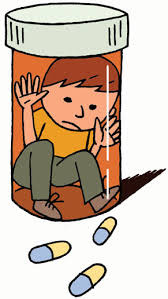
The amount of psychotropic medications prescribed to children in Child Protection is horrendous (and the vast majority of these children receive grossly inadequate mental health care).

Will abused and neglected children forever remain stuck between the sexual abuse, violence and drug use within a dysfunctional family and the unresponsive and under-resourced agencies chartered to care for them?

One of my first cases involved a judge returning a four year old boy to his father. The father was in prison and had a court order in an adjacent state to stay away from young boys (due to his sexual assaults on young boys).

Over a four year period this boy was tied to a bed, left for days alone in an apartment, starved, sexually abused and beaten severely. Recovering from this type of abuse might have been possible had he received sufficient care and resources. He did not.

The boy is now 19, and his life was altered forever in many terrible ways by a judge’s misguided decision to return him to his father.

Would a judge that understood the depth and scope of the problems abused children suffer from have made the same decision? Do we routinely appoint judges to Child Protection cases that do not understand or appreciate the nature and substance of the issues that will forever impact At Risk children? I think so.

I have many more sad tales from 12 years as a guardian ad-Litem. Most people working in Child Protection have similar stories.

This is not a small problem. Three million children a year are referred to Child Protection agencies in America. If witnessing the rape and assault of your mother were considered child abuse, the number would be closer to Six Million.

The cost of making better decisions for our At Risk kids would be exponentially less than the costs we continue to pay for with disruptions in our schools, crime in our communities, ongoing institutionalization, and of course, the misery of millions of children growing up to lead unhappy and dysfunctional lives (and starting their own unhappy families).                                                                                                                                                                                                                                                   Tell us your story, comment, or perspective.  Think of someone you would like to send this to? Press the “share this” button below.

What We Do To Our Children, They will Do To Us

America’s marquee ‘Children don’t count’   

David Strand
Columnist

Oh, it’s so painful! Deep in our guarded innermost self, we believe something with great passion. Evidence to the contrary cannot shake our firmly held conviction. We cover our ears, our eyes and from our mouth erupts some primordial sound to render our senses numb.

“Don’t show me proof that my belief is wrong. Don’t confuse me with facts. My mind is made up.”

Our precious America, we are taught, is the exception to the world. No other nation can even come close. Tragically, a great many children suffer from a denial of the reality in our country.

The evidence is confirmed by new studies reported in the mainstream media. In March the Center for Disease Control and Prevention released the results of a study of sexually transmitted diseases (STD) among teenage girls. It was a shock. One in five white teens and half of African-American young women are infected with a STD. Across all groups the incidence was one of every four teens, and climbing!

In April, the America’s Promise Alliance released a report showing that only half of students in public schools in America’s largest cities earn graduation diplomas. In 17 of the 50 largest cities the graduation rate was below 50 percent and as low as 25 percent. Overall the high school graduation rate across the nation is barely 70 percent. Former Secretary of State Colin Powell, founding chair of the alliance said, “When more than one million students a year drop out of high school, it’s more than a problem, it’s a catastrophe.”

Despite decades of feeble attempts to improve our public schools, the downstream consequences for the criminal justice system have been devastating. It is literally busting at the seams.

The May 10 issue of The Economist poses the question about America, “Land of the free?” From 1980 to 2006, the prison incarceration rate exploded by more than quintupling, to the highest prison inmate rate in the world. In spite of massive confinement construction, the U.S. federal prisons are now filled to 131 percent of capacity.

Meanwhile, these critical issues that plague our children are absent from the presidential campaigning that floods the media. Only when John Edwards was in the race was there any emphasis on the problems of at-risk families and children. In endorsing Barack Obama, Edwards extracted a promise that this issue will not be forgotten. I have heard little about it since.

Some prominent people have tried to prevent today’s epidemic of STDs. Included were recent Surgeon Generals Jocelyn Elders, David Satcher and Richard Carmona. They all advocated comprehensive sex education for our children. Satcher even published “The Surgeon Generals Call to Action to Promote Sexual Health and Responsible Sexual Behavior” in 2001. Another study is “Teenage Sexual and Reproductive Behavior in Developed Countries, Can More Progress Be Made?,” 2001, Alan Guttmacher Institute.

The latter study compared the United States with Great Britain, Canada, France and Sweden. In every category of STD incidence, rate of pregnancy, abortions and births, the United States experienced the highest rates, by far. For example, the teen pregnancy rate of the U.S. is four times the French rate, three times the Swedish rate and twice as high as Great Britain and Canada. According to the researchers, our higher poverty rates and a lack of comprehensive reproductive biology educations are major factors holding us back.

Contrary to popular belief, the research also shows that all-inclusive education, including abstinence and prevention, has no effect on the age of first experience or the frequency of sexual activity among teenagers. But the deeply held belief that providing our youth with factual information will encourage them to have sex is as firmly entrenched as it is patently false. “We must keep them ignorant so they don’t get any bad ideas.”

The bottom line is that STDs are an epidemic among our children, and our high school dropout rate is a catastrophe, contributing to an explosion of prison incarceration that is unsustainable. By ignoring these problems and denying that they exist is quite simply collective insanity. One would think that even conservatives would support programs proven to keep our children protected on their way to adulthood. Apparently not.

Since the start of the current school year, more than two dozen high school students in the Chicago schools have been shot to death. Are we ready for the carnage heading our way?

Pliny the Elder said, “What we do to our children, they will do to us.”


David Strand is a KARA board member.

  Tell us your story, comment, or perspective.  Think of someone you would like to send this to? Press the “share this” button below.


From Child Protection to Soldier

School Military Recruiting Could Violate International Protocolby Jim LobePublished on Wednesday, May 14, 2008 by Inter Press ServiceCommon DreamsWASHINGTON  

Pressed by the demands of the “global war on terrorism”, theUnited States is violating an international protocol that forbids the recruitment of children under the age of 18 for military service, according to a new report released Tuesday by a major civil rights group that charged that recruitment practices target children as young as 11 years old.

The 46-page report, “Soldiers of Misfortune”, was prepared by theAmerican Civil Liberties Union (ACLU) for submission to the U.N. Committeeon the Rights of the Child.

This is the reason why the United States is the only nation in the world that has not ratified the UN Treaty on the Universal Rights of Children. (Actually, Somalia also has not because they don’t have a government.)

We insist on sending many children to military high schools where they learn the ways of military training and life, a custom most prevelent in the South. This is an opportunity to remind people of our preference of military solutions to most problems, contributing to our reputation of a pariah of the world.

Why talk, when we can fight. David Strand

Why educate children, when they make such great soldiers. Mike Tikkanen                                                                                                                                                                                                                                                                                                                                        Tell us your story, comment, or perspective.  Think of someone you would like to send this to? Press the “share this” button below.

California Dreaming


Last week the State of California achieved perfect synchronicity in its public policy making when it announced that criminals would be released early because the state could no longer afford to keep them incarcerated.
This news reminded me that when I began my work as a guardian ad Litem there were states predicting the need for prison expansion based on the number of failed third grade reading scores within its schools.

Instead of investing in reading for third graders (and early childhood education), California began investing in a third strike punishment model and building tens of thousands of prison beds.

Today, crime, courts, and incarceration are the largest piece of California’s state budget. The prison lobby is the largest lobby in the state, and California recidivism is above 70% (the highest in the world?)

The state now has the dubious distinction of spending more on prisons than on education and one of the highest violent crime rates in the nation

Former MN Chief Justice Kathleen Blatz and Marion Writght Edleman (Children’s Defense Fund Founder) have pointed out that almost all the youth in our juvenile justice system have come through chiild protection services and the vast majority of adults in the criminal justice system are graduates of our juvenile justice system.

California now has a perfect prison feeder system.

Nationwide, about 25% of America’s youth are being tried in adult courts today. Once these youth are treated as adults in our court systems, they rarely leave the system. Juveniles are more likely to be raped and brutalized, and suicidal, than adults within the system (they are just more vulnerable).

California’s great investment in its criminal justice system has ruined tens of thousands of lives and paid very poor dividends to its citizens. It is horribly expensive, almost all the inmates recommit crimes within three years, and now they are letting the inmates out quickly because they are out of money to feed and house felons (let them rob and steal for their dinner).

The math is pretty straightforward:

X years and Y dollars of early childhood education/programs = children that can go to school and learn to read* graduate and build a meaningful life within our community. They go on to have jobs, raise normal families, and lead meaningful lives, versus

Spending those same dollars on prisons and punishment that has bought us recidivism, astronomical crime costs (1.5 to 2 trillion dollars annually) failed schools, and a persistent fear of walking home in our neighborhoods at night. What does forty years of social services and incarceration cost a community? What is the value of a healthy productive citizen?

This cycle will not be broken overnight. We will have to invest in programs that make children ready for school (it is a proven solid investment) and ready for life.

Our thirty year spree of “the floggings will continue until the Morale improves” policy making model has created more felons and mentally unhealthy people than any other nation in the world.

Are we able to change the direction of our public policies so that thirty years from now, all children will be valued as potential citizens and given access to health and education that are critical to participating in their community?

Minnesota has just experienced three consecutive years of double digit prison (investment) growth. Hennepin county arrested 44% of its black adult male population in 2001. Nationally, 13% of Black men can’t vote because they are felons. The racial disparity is clear to some of us.

After 12 active years in the County Child Protection system, I can testify that early childhood programs work as a deterent to crime and as a fiscally responsible means of running a county (or a state).

All children want to be happy creative beings. It is human nature. We can either facilitate this, and save tons of lives and money, or continue to build more crime and prisons and let our prisoners out early when we run out of money.

Support our effort to positively redefine the lives of at risk children, join our grassroots efforts and join one of the action / discussion groups you see on this website.   Make a difference in your community.                                                                                                                                                                                                                                                                                                      Tell us your story, comment, or perspective.  Think of someone you would like to send this to? Press the “share this” button below.

Economics 101

My passion for the topic and love for public speaking often places me in front of business groups making a basic economic argument for mending abused and neglected children.

It pains me that this simple lesson in finance is so hard to comprehend for so many people.

One untreated, *traumatized” child can spend thirty or forty years in and out of institutions (child protection/juvenile justice/criminal justice), hurting themselves and others along the way.

Former MN Chief Justice Kathleen Blatz says that “the difference between that poor child and a felon, is about eight years”.

Most of these poor children becomes unhealthy adults and have their own poor children (now that’s exponential). Many preteen mothers have adolescent felon falthers with little hope of raising a happy or functional family. Recent studies show that almost 80% of children aging out of foster care are leading dysfunctional lives.

A recent ACE study proved that almost 70% of the serious and violent crime committed by juveniles in Ramsey County was committed by children living in 2 to 4% of Ramsey County families.

The economics of treating at risk children early is proven to be exponentially less costly than paying for the many years of institutionalization and the added encumbrance on our communities when they are not institutionalized.

Consider the burden these children place on our school systems. Few people outside of education have any idea about the serious behavior problems abused and neglected children bring to school. No record is kept of 9 year olds on psychotropic medications or the treatment they do not receive.

It can reasonably be argued that the approximately three million U.S. children reported to child protection services each year are passing through our public schools. Educators are required to manage a significant number of seriously troubled children while trying to bring meaningful instruction to large classrooms with less and less resources and public support each year.

For the last several years 25% of America’s graduating seniors have been functionally illiterate and our inner city high school dropout rate is approaching 50%.

On the world stage, we have fallen from our many years at the very top rank of all educational and qualitiy of life indices (among the 24 other **industrialized nations) to the very bottom in almost all of these measurements.

It is not educators or schools that have failed us. It is the unpreparedness, and serious problems brought to school by the millions and millions of troubled children that have overwhelmed our institutions.

In 2006 MN schools had 900 students per counsellor in its high schools. New Jersey removed all of its counsellors and mental health workers (all students needing help were sent to jail).

Under the NCLB almost all non “critical” programs have been forced out of our schools. Troubled youth find little help to deal with their serious problems (in 2005 MN had a total of 15 child psychiatrists).

The number of students unable to read by the third grade relates directly to and is a accurate predictor of high school dropout rates. Not graduating from high school is an accurate predictor of future criminal behavior.

Some states have predicted the need for future prison space by extrapolating from failed third grade reading scores. Minneapolis MN (Hennepin County) arrested 44% of its Black adult male population in 2001 (with no duplicate arrests).

America’s cost of prisons and jails has grown exponentially since the drug king pin laws and mandatory minimum sentencing guidlines were passed into law twenty years ago. The price tag for crime in the U.S. is estimated at between 1.1 and 1.6 Trillion dollars each year (insurance and incarceration cost figures).

It is pretty clear that helping each child cope with a troubled family life, learn to read, make friends, and become a functioning juvenile will add contributing members to our communities and save us millions of dollars (that is without calculating the very real costs of violence to our friends and families and our growing number of tortured inner city neighborhoods)

Can you help me to bring this message to a few more people so our policy makers can begin to understand the importance of supporting programs, people, and policies that help at risk children? 


*In the U.S., the Imminent Harm Doctrine requires that a child’s life be endangered by his parents before being removed from the home. This is one definition of trauma.
Many abused and neglected children live for years in violent abusive homes. The World Health Organization’s definition of torture is “extended exposure to violence and deprivation”.

Post Traumatic Stress Disorder is twice as common among children in child protection systems as it is among war veterans returning from Iraq.

**Those 24 nations with 200 year old democracies. Today we rank ourselves about in the middle of the 48 “emerging nations” instead of the much more accurate and meaningful “last” among the industrialized nations.

Consider joining or starting a KARA (Kids At Risk Action) group on this website to start a dialogue in your community.
Best wishes,
the KARA team                                                                                                                                                                                                        

Bad Public Policy


The 35 W bridge failure will end up costing about one billion dollars (read below) and if our policy makers would wake up, they will see that it was about five hundred times more expensive than the requested bridge maintenance that would have kept the bridge in “pristine condition”**

Are we doomed to see our once safe city streets, superior schools and, child protection system, fall apart just like the bridge? As a CASA volunteer and child advocate, I am well connected to the benefits of taking care of children when they are young to avoid their collapse when they are juveniles.

Former Supreme Court Justice Kathleen Blatz states, “ninety percent of the youth in our juvenile justice system have come through child protection”. Identified and treated early, young children can be given the skills to succeed in school and our community.  Ignored because of our new anti tax paralysis, the serious issues faced by children in child protection are not dealt with until behaviors become uncontrollable and someone gets hurt (it is exponentially more costly to institutionalize people over their lifetimes than it is to give them the skills to lead normal lives). 


About the bridge;  Minneapolis City Pages September 5th, Economy In Freefall article quoted Governor Pawlenty as estimating the additional costs of gas and extra miles due to the bridge collapse at $400,000 per day (146 million dollars over the next twelve months).

An accurate calculation must include a fair minimum amount for the (lower estimate) 144,000 cars that used this bridge every day. Forty eight cents per mile is the IRS allowance for automobile deductions and this does not include the headache factor of stopped traffic and longer commutes that I seem to be experiencing.

Assuming an average of five additional miles for each car each way (some people take the longer 694/494 route around town and others drive fewer miles through downtown city streets or the 280 detour). Multiplying five miles each way for 144,000 cars per day equals 1.4 million miles per day times the IRS forty eight cents equals $691,000 per day, or almost twice the governors estimate.

The new bridge itself cost 235 million dollars.  The deconstruction and buying up of land around it for the new bridge was about 225 million dollars.  With no extra consideration for the ten to twenty minutes at each end of our commute for well over a year, we can honestly call this the minimal hard cost of the bridge failure.

Add the  460 million dollars for the deconstruction and the  new bridge  to the lawsuit settlements for wrongful death and injury from the victims of this disaster (which are being hidden by legal and political smoke and mirrors) sure to be a few hundred million dollars (thirteen people died and over one hundred people were injured), and using the Governor’s own figures for hard costs of additional miles driven would be about one hundred and fifty million dollars (thirteen months of driving) and a minimal value for the failed businesses (one hundred million dollars) as a result of failed accessibility, and a billion dollars becomes a realistic estimate of the total hard cost of not mainataining our bridge.

**New York’s twenty year veteran bridge engineer, Samuel Schwartz (NYT OP-ED 8.13.07) estimated that an average of 178,000 dollars annual maintenance would keep each one of his states bridges in pristine condition.

It was five hundred times more expensive for our public policy makers to ignore the advice of the bridge maintenance engineers than it would have been to listen to them.  Our own Governor and his Lieutenant Carol Molnau were repeatedly asked for maintenance money for the bridge over several years prior to the collapse, but denied it.  

Anti tax people have cost Minnesotans a billion dollars and killed and wounded one hundred and thirteen people.   

I am making the same argument for the children in America’s child protection systems;  For over twenty years they have largely become preteen mothers and felons as a result of bad public policy.

Three million children per year are reported to child protection agencies, 90% of the children in juvenile justice have come through C.P., and almost all felons have come through J.J. The cost of extensive institutionalization, the crimes they commit, their impact on our schools, city streets, and quality of life are profound.


Early childhood programs with more training and resources for child protection workers would save us billions in prisons, schools, courts, insurance, and pain as at risk children become functional adults instead of felons and preteen moms.


Home values within our inner cities are often half  (or less) than they would be in a safe suburb. The insurance estimates of crime alone in the U.S. are between one and one point six trillion dollars annually.

It is costing us a fortune to ignore the maintenance of our bridges, courts, schools, and children.

It is time to counter the short sighted and inaccurate assumptions of the anti tax people. Our quality of life has suffered terribly with these tight fisted and mean spirited people wrecking our bridges and ruining our children.


Start this conversation in your community, join a discussion group on this website (or start one of your own).


Onward and upward,


The KARA team

United Nations Conference

My response to the email from the United Nations asking me to do a workshop at the fourth annual Youth Assembly in New York was that it might be a mistake. She assured me that it wasn’t, and that my message as a volunteer guardian ad-Litem was of interest to this conference.

My Invisible Children workshop drew over ninety attendees and many of them actively participated in the almost forty minute dialogue that followed my presentation.

These were people that came a long way to be involved and learn how to make a difference. Most of my workshop attendees were from the U.S., with a few people from the other industrialized nations. The larger conference audience was much more diverse, representing many nations. Hamid Karzai, President of Afganistan was one of many internationally known speakers at the conference.

You may listen to the audio of the workshop on the KARA homepage.

The workshop discussion was centered around “Why Some Children Don’t Learn” and to help attendees understand the mental health issues of abused and neglected children and what resources they need to gain the coping and learning skills necessary to function in our schools, homes, and communities.

A primary goal of mine was to show how Post Traumatic Stress is common among children that suffer from extended exposure to violence and deprivation, and make a solid case for why educators, social workers, foster and adoptive parents, and others dealing with abused and neglected children need more and better resources if they are to make progress in helping these children succeed with friends and family, at home and in school.

I also work hard to explain why we need to be advocates not only for the children, but for the people dealing with abused and neglected children.

Too many teachers are leaving their field or transferring out of inner city schools to suburban or private schools. The danger and difficulty of working with violent and unstable children is real and growing.

Our schools are showing the results with high rates of failure and dropouts. Our communities are showing the results of high crime rates and the world’s highest rates of incarceration.

Without support at the community level for programs and policies that support America’s institutions, continued exodus from these most important fields and resulting failure of the children they serve must be expected.

One of the workshop attendees told me afterwards that she had recently quit working in her much loved field of social services because of the lack of resources and negative recognition given to her and her coworkers.

Her comment (rephrased) was that she could make three times as much money being a nanny for one child in New York (and be appreciated for it- my insight) than she could caring for a huge caseload of really needy children without having the resources needed to make a difference in their lives, watching them fail, and at the same time, be blamed for their lack of progress (it truly is depressing).

Her heart was genuinely with the children in need, but it is grueling work and without the resources, or support of the community (or the system) one can only stand so much failure (it becomes personal).

Addendum;

If you ever have the chance to visit the United Nations and take the tour, do it.

Our tour was lead by a bright young man from Uruguay who was able to give us the sense of history and evolution of the UN.

There is an aura of cooperation and striving for a better world that drifts from the walls. At the same time there are many sorrowful examples of tortured people, eleven year old boy soldiers, murdered and raped children, and nations committing horrific violence upon their own innocent populations and their neighbors.

The need for an organization committed to mediating disputes seems so necessary. The violence that is so endemic among us seems so useless. We are stuck with the latter, we can only hope for the former.

Start or join our online groups and discussions on this website to promote this dialogue in your community.

Be involved,

take the lead,

the KARA team

By Definition

Definitions  

If institutions are to be defined by what they create instead of what they were designed to create, Kathleen Long Angels and Demons what would an objective analysis tell us today?

How are our schools functioning, what are the results from foster care, is juvenile justice serving its purpose, do the courts work, and how successful is our prison system?

Internationally, our high school performance has fallen from world leader to trailing in almost every category. We now compare ourselves to “emerging nations” so that we are 43rd out of 121 emerging countries instead of 21st out of the 24 industrialized nations in language, math, history, physics, and most other subjects.

25% of America’s high school graduates are functionally illiterate upon graduation; one out of three of them could not find Florida on a recent map test. In Minneapolis, the sister school (Roosevelt) to the one I attended (Edison) has graduated under 30% of its students over the last three years, the city average graduation rate is just over 55%.

Former MN Supreme Court Justice Kathleen Blatz stated that 90% of the youth in the juvenile justice system had come through the state’s child protection system (almost all criminal justice inmates come out of the juvenile justice system). Nationally, almost 25% of juveniles are tried as adults in the U.S. and a growing number of states allow children 13 and 14 years old to be tried in adult courts.

A recent study indicates that up to 80% of children aging out of foster care are leading dysfunctional lives. A Minnesota judge has provided me the Prozac, Ritalin, and other psychotropic medication prescriptions taken by children in her courtroom (most of them under ten years old) and it points at one of the key issues thay might explain why so many youth leaving the foster care program find it hard to cope with life.

In my experience in the child protection system as a guardian ad-Litem, it is a rare state ward that has found adequate mental health services (many of them are proscribed psychotropic medications with minimal professional help). Traumas experienced in the birth home and the following court process of removal leave permanent and painful scars. To treat these traumas with psychotropic medications and no long term / consistent therapy leaves children with problem behaviors and poor coping skills for the rest of their lives.

America has more people in prison per capita than any other nation. We also have more criminals and violent crime than any other industrialized nation. Nationally, 13% of Black men can’t vote because they are felons. In Minneapolis, 44% of African American men were arrested in 2001 (no duplicate arrests) African American Men’s Study

If we are to define our criminal justice system by what it creates, it is successful in building more prisons than any other nation, maintaining terrifically high recidivism rates, keeping inmates in longer, and capturing huge percentages of African American men in the process. 


Similarly, if we define the our child protection and juvenile justice systems by what they create, most of the inmates in criminal justice come from juvenile justice, and almost all of the youth in juvenile justice (in Minnesota) come from child protection services. It follows that children in child protection have a terrific potential for entering the criminal justice system.

It is painful for me as a citizen/guardian ad-Litem to watch the impact of mistreated (in their birth homes and as state wards) children passing through the system, failing in school, and aging out of foster care going onto lead dysfunctional lives.

What will it take for our communities to recognize that by abandoning the weakest and most vulnerable among us we not only destroy children’s lives but perpetuate chaos and dysfunction in our communities?

Would we care more if we knew the cost to society for thirty to fifty years of institutionalization plus the cost of youth crimes and 14 year old girls having babies?

It is not the people working in these fields that are to be blamed*.

There are millions of educators, foster & adoptive parents, social workers, court and justice personnel and others putting great effort into making life better for struggling children and families.   I am one of them. 

Our schools, courts/justice, child protection systems, and our health systems will not sustain our nation without a commitment to support from our communities and policy makers to do the right thing.

Investing in children is the best investment this nation can make today.   It’s what we are not doing that is expensive. The longer we wait, the more lives will be damaged, and the more it will cost us as a society.   Pass it on.  Consider starting a conversation on this topic in your community.  Join or start a discussion group on this website to begin.

*Blaming teachers (as many politicians do around election time) is not fair or productive.   Teachers don’t teach for fame or wealth, they chose this field because they care about kids, learning, and community.   Teaching is hard work at modest pay (the same can be said for social and  justice workers).

More reading; Federal Reserve Bank Chairman Art Rolnick’s Federal Reserve Board Article
Best wishes,
tu amigos the KARA team

Speak Up For Children

An early childhood memory was riding with dad when he delivered sweet corn from our garden to migrant farm workers who were living temporarily in our town stockyards. It must have been the fall of 1942 and I can still see the small groups of ragged men huddled around boiling pots over open fires. 

As we left the grateful gathering, dad told me a story about his dad, my grandpa Halvor, who died two years before I was born. Dad said one of grandpa’s favorite sayings was, “there is no shame in being poor, but it sure is inconvenient.” Halvor was speaking from experience because he raised 22 children during hard times.

My family and most I know have fared better, but poor families continue to struggle. Recent Minnesota policy has seen cuts in medical assistance eligibility, an 82% increase in U on Minnesota tuition since 2001 and drastic cuts in support for child care, a critical need for families trying to survive on low paying jobs.

Right now there are THOUSANDs of qualifying families for state child care aid but they can’t get it because there is no money.

For those who care about kids this is an opportunity to do something.

Minnesota can speak up for children, who through no fault of their own, are ‘inconvenienced by poverty’. You can call your representative and senator and tell them to find money to pay for child care for the families who by policy deserve it, but can’t get it because there is no money.

Funding child care policies saves taxpayer’s money. Art Rolnick, head of research at the Minneapolis Federal Reserve has proof. A republican, Rolnick calculates that investing in early child care will return at least 17% annual compounded savings (after inflation) in downstream society costs.

Art’s calculations are conservative. By including the very real costs of crime, problems at risk children have in our schools and high costs within our health care systems, 17% may be just a fraction of what it costs our community to abandon poor children.

More importantly, supporting day care for disadvantaged children is the right thing to do for all Minnesota’s kids.

In a public meeting at Hamline, Rolnick lamented that this ‘no brainer’ idea is overshadowed at the Capitol by wasteful sports stadiums (and cries for lower taxes*).

More of us need to raise our voices for children if there is going to be a change in public policy toward the weakest and most vulnerable among us (children have no voice but ours in this political system).
* authors words

Saving Ourselves From the Next Virginia Tech

24 months ago in a small Minnesota town, a mentally unstable student murdered and wounded 14 students before killing himself (my April 2005 weblog posting).

Jeff Weise also kept an outrageous website openly referencing homicide and suicide. Jeff was also denied treatment and prescribed Prozac*. After the carnage, Red Lake community found the money for a mental health family center to counsel troubled youth.

At that time in Minnesota there were 15 child psychiatrists in the entire state (population about 4 million) and the student to counselor ratio in MN high schools was 900 to 1.

As a child advocate (long time guardian ad Litem) I strongly feel the need for mental health therapy for those who need it. The children I work with have been severely traumatized and need adequate attention paid to their needs.

In my many years as a guardian ad-Litem it has been my experience that at risk children don’t get help until after their behaviors have become unmanageable and dangerous. Often the help they get comes in the form of a pill and not the personal professional counselling that they really need.

A Hennepin county judge has shared with me the psychotropic drug medications being taken by children in her courtroom. It is truely unbelievable how many disturbed and undertreated youth walk among us.

When attention to mental health services comes earlier, our communities can save themselves from the immense suffering that follows these horrific events.

* Not too many years from now it is my hope that we will recognize the repercussions of legally drugging children with psychotropic medications without adequate mental health services. Today we can only read about these consequences in the newspaper.

Everybody Wins

A few weeks ago I listened to Larry Rosenstock from High Tech High in San Diego talk about his inner city high schools that send one hundred percent of their graduates onto college.


It is real, it is achievable, and it is simple in how it works.


Educators and students are given ample room and incentive to explore the wonders of learning with a caveat that studies be personal and relevant.


Somehow, this formula has taken root and the results are the best that could be dreamed of.


Everyone loves it and everyone succeeds.


There are many reasons but no excuse for why this wonderful way of approaching education is not being replicated throughout the U.S.


All children deserve a shot at being educated and productive members of their community.


Presently our nations inner city graduation rates are between 50 and 60 percent (my high schools sister school, Roosevelt South has graduated under 30 percent of its students for the past 4 years).


America’s school system used to be the envy of the world. Now it is hurting. We should all wish for success for all our children.


Review the High Tech High website, send it to your state Representative/Senator, your governor (if you are in MN = governor@state.mn.us )
We are a representative democracy. Without our input policy making is left to special interests (and we all know how well that works).
Good graduation rates morph into happier people and safer communities. Everybody wins.


Day Care; The Bargain

Because the waiting list for subsidized daycare is one year into the future for the father of the children I represent (as a county guardian ad-Litem) there is a good chance that his two small children will be taken from him by the county and adopted by someone he has never met.    

It is also possible that he may not be able to visit his children if they are adopted.

John (not his real name) is an ex felon that has turned his life around and is now there for his children when their mother has lost custody due to her severe problems with substance abuse and failure to keep her children safe from harm.

John’s efforts have been remarkable. He works hard, means well, and loves his children. His job gives him a great sense of meaning and is very important to him.

His choice today is to quit his job and go on welfare and care for his children or keep working and face losing the children to adoption. Minnesota used to be the fifth best state for providing day care. Today it ranks 29th.

What benefit does our community reap by giving him this choice? Do we save that much money? The cost of welfare and daycare are both about the same (so money isn’t the issue).

I’m in touch with the children’s suffering and I know how much it will hurt them if dad chooses to keep his job and give up his children.

It’s been a brutal year for these children as they’ve watched their mother struggle with substance abuse as they were moved a foster family while dad and mom have fought to create a home that the children are safe in.

I appreciate the argument that “if we were talking about mom” the assumption would be that mom quit her job (go on welfare) and care for her children. Is it useful to our community to force either mom or dad to quit their jobs and go on welfare because they can’t afford childcare?

What higher purpose is served by taking children from poor people that have to fight so hard just to live among us?

The sadness that I’ve witnessed this family live through this past year is terrific.

Daycare for poor working class people is not an extravagance if it can keep families together and mom or dad working. It is a bargain.

Respond to a KARA blog, or join or start a discussion or group to start a dialogue in your community.

Let’s help our neighbors

the KARA team


Happy Holidays To All

Being warm and fuzzy about friends and family during the holiday season is the point of it all. Expectations created by our frenzied gift giving and guilt making culture make it difficult. No pointers here, just observations.

I was knocked out of my warm and fuzzy state by a neighbor of my most favorite in laws on our holiday trip this year. This neighbor (foster family) had worked hard to make a loving home for abused children that they hoped to make a permanent life with.

This family was stopped in their adoption by a single social worker. Instead the children went from their familiar and loving home to strangers. Based only on the decision of a single worker. My family members made several attempts to provide character reference and a good word for the family but were told that it wasn’t their business and to stay out of it. My brother in law was frustrated that there was nothing that could be done to influence the lives of these children that they had watched thriving in a good home.


There was no guardian ad-Litem or outside observer to give the judge another perspective. The children were not allowed to voice their observations or desires. Outside support for the family was not allowed. There were no checks and balances to counteract mistakes or bad decisions.  

We all know how critical it is for children to bond and begin the process of making a whole new self out of new surroundings.

For a child there is nothing more traumatic (aside from death) than being removed from your birth family.

Healing can only come from the rebuilding of broken emotional attachments and the redefinition of self that comes from family.

I compare removing children from a long term foster care home unnecessarily to re-breaking a bone after it has set. 


Have we not discovered the mental dynamics of the healing process a child goes through to become a functioning member of our society? Do we know what doesn’t work?

In a recent national study, 80% of children aging out of foster homes go on to lead dysfunctional lives (drugs, alcoholism, mental illness, crime, no job). In Michigan (where this family lived) the governor stated that 90% of children that have aged out of foster homes were in jail or prison.

Our nation suffers from a great disparity in the quality and integrity of services and providers of child protection. There is a great cost in resources and lives by not caring enough about what happens to the millions of children that are placed in Child Protective services each year.

It is awful for a child to be removed from a birth home. But when it happens it should be the lesser of two evils. It is criminal for a county to unnecessarily break the bond a child has established in a new home because of a poorly designed Child Protection system.

I am an outspoken advocate for the guardian ad-Litem program. Give children a voice in their own childhood. It will go a long way in improving their lives and the dismal statistics that are so pervasive today.

How is your state handling children in need of child protection? 
Pass this story on to others and send me your own best and worst stories on your experiences with the child protection system.
Join or start an one of our online groups/discussions on this website to carry this discussion into your community.
Best wishes,
the KARA team

God Save Our Pets


On November 16th I gave two presentations at the 24th Upper Midwest Conference on Adolescents & Children In Need in Arden Hills MN;

“WALKING THE TALK FOR CHILDREN” &

“WHY SOME CHILDREN DON’T LEARN IN SCHOOL”.

I forgot what gruelling work public speaking becomes as you enter the second ninety minute session (I had fifteen minutes between sessions).

By five pm I was worn out.

My presenting method has changed over the years to accomodate my conviction that learning takes place when participants become an active part of the discussion.   My secret for prompting worn out, after lunch crowds into a discussion is to hand out striking news articles on the topic that prompt an opinion or observation. It works.

The story that stuck with me the hardest came from a social worker.

She had reported severe and obvious child abuse at a home in her community on over a dozen separate occasions without any response from from child protection services (because there were no broken bones or bleeding and of course not enough resources in the community to deal with child abuse).

Some months later, one of her workmates noticed an emaciated dog on the premises of the abused child’s family, and told this conference attendee to report the emaciated dog.

She did.  After the humane society did its investigation, child protection services were referred in and the children were removed from the home.

That’s kinda how I see it too;  adults, pets, children, day care workers, fish and insects.

What’s it like in your community? (report the dog?)

Start this discussion with a group on this website and bring it into your community.  Change only comes when people like us start talking.

Onward and upward, 

the KARA team


Children’s Defense Fund Training

mi amigos KARA(Kids At Risk Action),   

The Children’s Defense Fund Leadership Training was a genuinely rewarding experience.

There was a power and a richness in the Alex Haley farm location (100 acres of beautiful trees and old buildings in Clinton Tennessee–20 miles from Knoxville).

The late Alex Haley’s story of developing as a struggling young Black author (his book “Roots”), travelling to Africa to trace his family, and his connections to slavery and the south, come alive as the CDF staff talk about Alex Haley’s life and Marion Wright Edelman discovering the farm and raising the money to buy it for the Children’s Defense Fund.

CDF trains allot of people there. It is a busy place with a committed group of presenters and staffers.

The training concentration was on:

A; being a more effective leader, and B; influencing lawmakers.

Item A was terrific (I appreciate that I to have work to do in this area) &,

Item B was important, but it hurts me that almost no time was spent on the concept of learning about how to impact our immediate circle of influence or growing support at a community level.

I really wanted to discuss building a grassroots support within our own communities and how each and every one of us can grow our awareness and understanding of the serious problems our schools, courts, and health systems are experiencing due to the neglect and abandonment of our most vulnerable population.

And most of all, how we can become comfortable being “the voice” for At Risk Children in our communities.

I have delusions about how to be helpful to CDF for Item B.

Half of an experience like this is meeting so many smart and committed people from every corner of the country. We can learn so much by just sitting next to someone from Missouri, Chicago, or even St. Paul.

The nice lady from Missouri understood why her state was getting such terrific results from their Juvenile Justice system. She could have taught us some very important things (but she was not on the agenda). I was one of four men out of about 50 people, and also I think, the oldest.

They were kind to me (I did feel like a Geezer). My concentration on positioning for listening and closing doors to eliminate background noise really solidified my Geezerhood (although, I believe it was unplugging the noisey water cooler that sealed it).

Minnesota was one of several states that were well represented (five of us). It is troubling to ponder the future of children in states without child advocates.

I intend to stay connected to and network with the Children’s Defense Fund to be more effective in our work to find and promote programs that work for At Risk Children.

Stories/responses from CDF fellows about programs in different states consider using this websites for discussion and group functions.

The larger community needs a place to connect with child protection issues… let’s work together to do that.

the KARA team


Hardworking People – Prevent Child Abuse Minnesota

Saturday I watched a few hundred committed people gather for “Come Walk for an Abused Child Day” organized by Connie Skillingstad and Prevent Child Abuse MN.

It was a great collaboration of familiar faces. Hard working determined people pouring their time and energy into helping at risk children.

It makes me smile to know that there is no shortage of people wanting to do the right thing.

The energy Connie brings to her mission is something to witness. There are many others just like her, who for years have worked daily to bring positive change into the lives of troubled children.

It’s just a bigger challenge than can be handled without greater support from our surrounding community.

All that needs to happen for significant positive change in the lives of at risk youth is greater public perception and the awakening of our political leaders.

That can only happen if more of us bring more of our attention to the issues (speak, write, and do).

Prevent Child Abuse MN website;  http://www.familysupport.org/index.php Check them out

Support abused and neglected children, start a KARA group in your community

Have something to add?  Tell us your point of view or story…

If you think  someone might appreciate this information,  press the share button below..

Another Sad Letter


Mike,

I am the Grandmother of Amy* And we are in desperate need of many new/more voice’s of everyone of the grandparents that have lost our right to be able to see our grandchildren! Either because of the other parent getting custody or just because.

Please can you tell me what you know about being able to make the courts listen to the children and what they have to say, no matter what their age!

thank you so much!

We lost our grandaughter to a man who for some sick reason had to …Get even with our daughter! We no longer were able to see or talk to her, now she is dead!

My father has written a letter to the county and wants some answers from them as to why there is not a more indepth look at the background checks of the Other parent! I know this a very shallow explaination, but I am so lost!

Grammy!

* not a real name

This is one of the letters I’ve received from distraught grandparents trying to convince the local courts that their children were neglecting or abusing their own children.  After many years in the child protection system as a guardian ad-Litem, I’m convinced that our systems are overwhelmed and need to be re-thought to include more training, & resources, and better decision making for all involved.

Note, I too have experienced the county returning children to criminally dangerous parents and watching as they destroyed their children.

Copy this post and send it to your state representative

support abused and neglected children, start a KARA group in your community

Have something to add?  Tell us your point of view or story…

If you think  someone might appreciate this information,  press the share button below..

Moving

I’m now hated by one of the children I was best friends with as a guardian ad-Litem. She wants to be reconnected with her mother (which I agree with) and have her younger siblings moved back into her mother’s care (which I don’t agree with). This will be my fourth court battle with her mother (over seven children).

She and I met ten years ago at a court hearing that placed her out of the home when she was seven years old because her (crack addict) mother’s lover had been sexually abusing her (for about four years) and had once kicked her so hard she went into convulsions.

She has been on Prozac, Ritalin, and other psychotropic medications without any serious or long-term therapy pretty much her entire childhood.

Just a reminder to the rest of us what it’s like for a seven year old (3, 5,7, 11) to take the long ride to St. Joe’s Home for Children, not knowing if mommy will ever get well enough to tell me she loves me and hug me like she used to.

There is no terror greater than being taken out of the only home she has ever known; from the only people she has ever known, to be cast into a busy, unfamiliar place like St. Joe’s.

If we were honest, we would add, that all of Minnesota’s emergency mass care homes for abandoned children have a similar bizarre atmosphere.

The air is filled with the powerful emotional and mental health issues being dealt with by abandoned children and well-meaning, overwhelmed people barely able to keep their charges from hurting themselves.

My young (one-time) friend has moved into a dozen new homes over these ten years, knowing that no one loved her and feeling strange and different from all the other children in her home, or in her school, or on her block.

I will never forget the fear she showed when I drove her from the courthouse to St. Joe’s home for children. That fear has been with her for ten years and it is with her still, constantly.

You could say that her fear defines her as a person, as she makes all her irrational decisions based on fear and anxiety (almost all her decisions are irrational).

I believe that this child deserved better treatment than she received at the hands of our community. I also believe that our community would have spent less money, and been better served if it had provided this child better treatment.

Ramsey County Research


Just read the bold print first…

With appreciation for the hard work being done by RAMSEY COUNTY ACE:

RAMSEY COUNTY ACE:
OVERVIEW OF A COMPREHENSIVE INTERVENTION

Hope Melton
Director
Ramsey County (MN) ACE

The ACE target population – high-risk, high-impact Child delinquents, that is children age 12 and under who commit chargeable offenses, are an especially high-risk population with a disproportionate impact on society.

Justice Department research shows that child delinquents are substantially more likely to be recidivists and serious, violent and chronic offenders (SVJ). This research also shows that 3 out of 5 chronic serious and violent adult offenders began their careers before age 12.

These are the children that will become the 8% of adolescents who commit up to 70% of all serious and violent juvenile crime. ACE research indicates that serious and violent delinquency may be concentrated in just 2-4% of families. This points to the importance of early identification through the ACE Program.

Mark Cohen, in a 1998 article titled “The Monetary Value of Saving a High-Risk Youth,” estimated that the cost to taxpayers of a single lifetime serious, violent and chronic offender is between $1.7 and $2.3 million. This cost include criminal justice, victim, drug abuse, and lost productivity costs.

ACE research shows a strong historical pattern of criminality in families of child delinquents. Using Cohen’s estimates, we calculate the multi-generational “multiplier effect” to be between $3.4 and $11.5 million. In these families, criminality is likely to grow exponentially.

Call To Justice Forum June 28th

Help ourselves by helping at-risk children; 

On June 28, I attended the all day Call to Justice forum at Metro U in Minneapolis with about 500 others. Tom Johnson began the program with an overview of the mountain of research that went into the event and his observation that there is serious racial disparity in our police and court system.

Alan Page, Mayors Rybak and Coleman, smart top officers from both Minneapolis and St. Paul Police departments, Minnesota Senator Julianne Ortman, and a host of other insightful people from the University, the downtown council, WCCO, Hennepin County District Court, Council on Crime and Justice, Target Corp, and others came to talk about reducing racial disparity and enhancing public safety.

Three separate panel discussions and five presenters questioned and debated why the circumstances are so lopsided and what to do about the overrepresentation of people of color in prisons, courts, and jails. At times the discussion was passionate.

I was struck by the measured and open discourse between the panelists and the various approaches to understanding and solving the problems of discrimination and victimization. Many honest hardworking citizens have a very real complaint that they can hardly walk to the store without being stopped by police. The cops are in a hard spot for policing too harshly or not enough.

The North side is under daily assault by gunfire and murder. Families live in fear of bullets and gangsters. No amount of policing is making it easier to live in certain parts of our cities. All the prisons in the world cannot solve the problem of crime in our nation.

Only ten percent of the citations issued in Hennepin County to people of color are prosecuted (90% are dismissed). 44% of African American men living in Hennepin county were arrested in 2001 (without any duplicate arrests). At least six major cities in America have Black male unemployment rates of between 40% and 50% and ex felon rates of between 50% and 60%. There are over 600,000 felons leaving prison each year in America. Minnesota ranks behind only Milwaukee in racial disparity within our courts and prisons (Alabama, Mississippi, and Arkansas have better records than Minnesota).

Over ten percent of America’s African American men cannot vote because they are barred due to a felony on their record. Minnesota is in its third year of prison growth of over ten percent per year.

It was agreed that we need more decent jobs, preschool and after-school programs, diversity training, and concern for poor people.

No one at the conference addressed the mental health issues that are at the root of the criminal and juvenile justice systems problem.

Judge Kevin Burke answered my question about the role mental health plays in juvenile justice. He stated that 37% of his offenders had a serious mental health diagnosis. The national average appears to be close to 50%.

No one at the forum mentioned Prozac and other psychotropic medications that are being poured into children (as young as four) in our child protection systems without concurrent therapies or treatments. The traumas of child abuse and being removed from a birth family are severe and lasting. Children don’t learn social skills and mental health mending unless systems are in place to help. It takes a village and concentrated resources to make a damaged child healthy again.

I was keenly aware of the best and brightest minds in our community discussing the impossibly complex issues of crime and justice and racial disparity. It was disappointing that no one except Dr. Bravada Garret-Akinsanya (to the best of my memory and notes) brought attention to the fact that the majority of people in the juvenile and criminal justice systems have serious mental health problems that cannot be solved by policing, courts, or school programs. If no one talks about the core issue of mental health, nothing can be done to improve it.

Ending the cycle of child abuse, fetal alcohol syndrome, drug addiction and family violence that currently impacts the lives of America’s at-risk children will save great sums of tax dollars and allow thousands of children to lead normal lives.

Suffering and in great pain, abused and neglected children are unable to learn or succeed in school without restorative services. At-risk children grow into dysfunctional adults and often spend thirty or forty years in and out of public institutions (about 80% of children aging out of foster care lead dysfunctional lives).

While American policy obsesses over ‘terrorism’ and the few thousand ‘crazies’ that would destroy the western world, the exponentially greater problem of cyclical poverty, substance abuse, crime, child abuse, and the prison mentality lies just in front of our noses.

What is filling our prisons and ruining our cities is the methodical destruction of children of families stuck in the generational evolution of poverty, violence, and drug and alcohol addiction.

Children raised in these families enter our public schools, county child protection services and graduate into our juvenile and criminal justice system where they are punished further.

Ask anyone that has worked with abused and neglected children about the value of punishment as a tool to be used on at-risk children. Abused children often view their whole life as a punishment.

Our court system guarantees punishment for the behavioral problems plaguing abused and neglected children. That is why so many of them end up in prison. The correlation is stunning. Chief Justice Kathleen Blatz has stated that 90% of the children in juvenile justice have come out of child protection.

There is no money to be saved by not helping these children gain the skills and mend their behaviors to fit into our communities. We cannot hide from the violence and anger that grows with these children when they are allowed to move through our institutions without being made well.

We will be helping ourselves by helping them. Once the cycle is broken, at-risk children become healthy normal adults leading fully functional lives. Our schools will benefit, our courts, prisons, and jails, will shrink, and our streets will become safe again.


How best to build support for at risk children?

Got a different point of view, want to play devil’s advocate, or just think we’re all wet? Post your experiences or examples.   If you think  someone might appreciate this information,  press the share button below..


Art and Development in Abandoned Children


This week I was introduced to Free Arts, an organization that gives painting, dancing, singing, acting and other active Arts participation to abused and neglected children.

I’ve talked with University professors about the ‘one thing’ at risk children can put passion into without fear of rejection. This is a wonderful program directed by a passionate person (Michelle Silverstein). www.freeartsmn.org

Abandoned children have an embedded distrust that keeps them from closeness (attachment, love, trust) of others. Early childhood abuse leaves children with constant anxiety, hatred of authority, and a severe distrust of all people, making attachment (love/friendship, even the ability to interact with others) difficult for most and impossible for some at risk children.

Actively experiencing music, theatre, arts, dance, gives abandoned children the opportunity to drop their relentless anxieties and put full energy and passion into something that can’t neglect or hurt them. This program could benefit a great majority of risk children if it were presented on a broad scale.

Children that have experienced success have hope. Working with abandoned children we all know the importance of hope.

Check out this program and recommend it to anyone you know working with at risk children. It is only through our support and understanding that right efforts get the attention they deserve. If one child benefits from this program by your referral, you will have changed a life.

Improving Attachment


Recommended parenting Techniques
To improve Attachment

The American Professional Society on the Abuse of Children (APSAC) recently released findings that are endorsed by the American Psychological Association regarding Reactive Attachment Disorder and attachment therapies. A task force formed by APSAC reported that there are many non-controversial interventions designed to improve attachment quality that are based on accepted theory and use generally supported techniques.

Among the caregiver qualities the APSAC recommended that support the development of healthy attachment are:

 Environmental stability
 Parental sensitivity
 Responsiveness to children’s physical and emotional needs
 Consistency
 A safe and predictable environment

According to the findings, improving positive caretaker and environmental qualities is the key to improving attachment. Calling upon traditional attachment theory, the report emphasized that children who are characterized as having attachment problems require a stable environment with parents taking “a calm, sensitive, non-intrusive, non-threatening, patient, predictable, and nurturing approach.”

The APSAC task force members went on to say that “because attachment patterns develop within relationships, correcting attachment problems requires close attention to improving the stability and increasing the positive quality of the parent-child relationship and parent-child interactions.” According to a review of more than 70 studies of interventions designed to improve early childhood attachment, the interventions that most increased parental sensitivity were also the most effective in improving children’s attachment security

Used by permission of Sage Publications from Child Maltreatment, Vol. 11, No. 1, February 2006.
Sage Publications, Inc.
2455 Teller Road
Thousand Oaks, CA 91320-2218
805-499-0721, ext. 7735 FAX: 805-499-0871
www.sagepub.com

Wellness and Child Abuse

The following is my synopsis of the Minnesota Medical Associations March 2006 article on Child Maltreatment by Dr. David McCollum. It’s meant for medical professionals, but I found it very well written and understandable; (the article)

http://www.mmaonline.net/publications/MNMed2006/March/clinical-mccollum.htm

Dr. McCollum clearly articulates the relationship between childhood abuse and a lifetime of physical and mental health issues.

He draws attention to how many adult health consequences result from childhood sexual and physical abuse, and neglect.

New technologies identify chemical and structural differences between abused and non-abused children.

We in the field of working with at risk children, watch as they struggle in school and with their peers, and with the all too common regimen of psychotropic medications that impact their personal development.

Dr. McCollum explains the research that proves the physiological explanations for abusive drug use, violent behavior, sexual aggression, mental health diagnosis, and why so many abused children do not grow up to become functioning members of their community.

His conclusions are my conclusions;

“For years, we have ignored the potential influence of childhood traumatic experiences on adult disease, preferring to look for genetic causes of disease and pure biochemical factors without considering experiential influences.

Given the new evidence that trauma in childhood alters the physiology of the brain, it is time for all physicians to be educated about the full health impact of violence and abuse and be trained to explore these issues as the true etiology of or an underlying (potentiating) factor that contributes to their patient’s maladies.”

I would add that there is a terrific human and financial burden placed on our communities as health care professionals, educators, law enforcement personnel, social service providers, try to deal with the continuous flood of maladjusted and dysfunctional behaviors that stem from childhood trauma (further reading in my book Invisible Children)

David McCollum is an emergency physician at Ridgeview Medical Center in Waconia, chair of the AMA National Advisory Council on Violence and Abuse, and president-elect of the Academy on Violence and Abuse.

Economic Security

Economic Security was the topic of the most recent Hamline University Dialogue ((4/20/06).

It was remarkable to hear Art Rolnick (Fed Reserve Board Chairman), Chris Farrell (Chief Economics correspondent American RadioWorks), and Jenny Keil (Associate Professor of Management and Economics at Hamline) relate the economic security of our nation to the education and well being of children.

There is a very real value to fostering a healthy population of citizens that can obtain an education, earn a living and take care of themselves and their families. In fact, it has been argued that it was the effectiveness of America’s educational institutions during the 1950s that made it’s population the most productive in the world.

The panel brought our attention to the very real cost to a community of children born into toxic, violent, drug using, abusive families. Mental and physical health problems explode into long term illnesses that keep at risk children from leading normal lives.

Instead of healthy productive children, untreated at-risk children become unable to cope with peers, their community, or at school and become more and more dysfunctional as they get older. For many years now our courts have been sending more children into the Juvenile Justice System and about twenty five percent of the Juvenile Justice youth into the Criminal Justice system.

Statistically, more than half of those children and youth are being diagnosed with mental health problems, their criminal recidivism rates are high, and their long term potential for remaining in the court system, jails, and prisons has reached an all time high.

It’s expensive to maintain a child through years of Child Protection services, more years of Juvenile Justice, and if they graduate to Criminal Justice, it is often a life sentence of recidivism (66% is the national average in America’s prison system). It cost almost $80,000 to maintain a prisoner at Stillwater Prison last year.

The smart money treats the child effectively at the first opportunity. It saves us money, breaks the cycle of family abuse,(healthy children have healthy families) and a human being.

Mike T
guardian ad-Litem www.invisiblechildren.org

The Longest Day


The longest day.

8am to 9pm last Friday Reassessing the Past, Present, and Future Role of Children and Their Participation in American Law. Hamline University 4/1/06

From a legal perspective the most under-protected persons in America are sexually abused children.

One study indicated that 11% of judges and 51% of prosecuting attorneys admitted that they had deliberately confused the child (witness) during the proceedings.

What this means in practice, is that the nine-year old girl sitting on the stand in the courtroom is being bullied by intense and deliberately confusing cross-examination about her abuse.

Everyone at the sysmposium agreed that children are not mentally capable of undergoing adult type cross examination, but it is clear that this still happens in many cases.

The outcome of child sex abuse trials is generally negative for the child, and often the abused victim ends up back in the homes with no negative consequences to the abuser.

Another common outcome, is that prior charges (both alleged and substantiated) are often not allowed as evidence against the perpetrator. This results in juries not knowing about extensive sex abuse histories of the abuser and ruling as if this were a single event instead of many years of child sex abuse.

Many County workers know that our criminal legal system doesn’t work for children and therefore choose not to bring suit against the child sexual predators.

This has been my experience as a Hennepin County guardian ad-Litem. Today for instance, I am preparing for my fourth trial in about ten years with a mom that has had five children taken from her on three different occasions.

The sex abuse was documented, and one report from ten years ago indicated that after being sexually abused, the seven-year old girl was kicked so hard by her abuser that she went into convulsions. The impact these acts have had on this poor girl are impossible to overstate. She is not

The current report shows the same things being done to her sixth and seventh children that were done to her first five; sexual abuse, violence, and drugs in their system (at three-years old).

The man who committed the acts ten years ago is still in the home and has never been brought to trial on any of the original accusations. It boggles the mind to think that this fellow has had NO negative consequences for his behaviors. One must wonder how many children he has impacted over his lifetime.

If you have stories about this topic, please send them to me.

Let’s all work to bring attention to this painful failure of our legal system.

The Christian Spirit


Boston’s Catholic Charities to halt adoptions (Star Tribune 3.11.2006) because of the churches concern with sexuality issues.

There are not nearly enough loving adoptive homes for the multitude of waiting children.

Because of budget cuts, war, and some would argue, misplaced priorities, state and federal programs to help at risk children are in jeopardy all across America.

Almost all the East Coast states have been plagued with examples of inadequate child protection services and sad stories about abused and neglected children being ignored or abused again by systems that are only partially supported by the institutions designed to protect them.

There are three million children reported as abused annually in this nation. About one million children enter child protection services. The number would be almost twice as high if the standards of Minnesota’s 1999 child abuse statute had remained and been implemented nationally.

In my work as a child court advocate (guardian ad-Litem) I have formed the conviction that gay and lesbian couples are extraordinarily well suited for adopting abused children.

They, more than heterosexual couples, know the turmoil and anxiety of feeling “different” and what it’s like to be judged by something you cannot change. They know what it’s like to feel self-loathing.

Behavior problems and mental health issues accompany abused and neglected children into their adoptive homes.

Children removed from their birth homes have been traumatized twice; once (usually over years) for the abuse that happened in the home, and then again as they proceed through the process of being removed from the home and through the legal proceedings that place them in foster and adoptive homes. It’s a frightening process for anyone. You should see what it’s like for a seven-year old. The experience will stay with you.

I would ask the church to spend one day with a teenager that has been on the adoptive waiting list for a longer than normal period of time and get to know the child’s issues.

Then, interview a gay or lesbian couple and see if you can perceive the enhanced sensitivity and understanding that I believe they offer an abused child.

This exercise will also make it easier for Catholics to understand the terrific need abused children have for bonding and for love and the ability of gay and lesbian couples to provide it.

Ending all adoption work for abandoned children in Boston because a gay or lesbian couple might adopt and denying all abused and neglected children this supremely important part of life because of outdated church doctrine is wrong. Is this what the church wants to be known for?

Talking About It


My family has a one-hundred year history of chronic alcoholism and some drug abuse.

I have had friends and family with schizophrenia, and relatives with other serious mental health issues.

Many of my friends have suffered from depression.

I have attended multiple funerals for suicides that were my workmates and friends.

Does it help anyone when the people or families involved with mentally unhealthy people to not speak openly about the issues?

Could it benefit these people to better understand the definitions and dynamics of the mental health problems that rule their lives?

Would our communities be safer, our schools more productive, and our families healthier if public and media attention were brought to bear on what makes a mentally healthy person and why that is important and what we can do as a society to make mental-health happen?

Of course the children I work with in child protection (as a Hennepin County
guardian ad-Litem) seem to be the most vulnerable to mental health issues.

More than half of all children and juveniles in the Juvenile Justice System suffer from a diagnosis of mental illness. About half of those children have multiple serious psychosis.

The statistics are about the same for children in Child Protection Systems.

It would serve us well to approach the issue with a desire to help. The cost to us today in failed schools, overburdened health systems, and truly dangerous inner cities is reaching a crescendo. It has become dangerous and painful for many families just to live in certain parts of our cities.

We would save real money by learning about the solvable problems that plague our children (and it would be the right thing to do).

Email this to your newspaper or state representative with a personal note with your own story.

San Francisco Chronicle Article Rob Waters


reprinted from Sunday, February 12, 2006 (SF Chronicle)

One Child, One Therapist/An innovative program partners foster children with therapists for as long as they’re needed, providing a stability otherwise missing
Rob Waters

When child psychologist Norman Zukowsky first met him, 6 1/2-year-old “William” had already lived through more hardship and trauma than many people experience in a lifetime.

He was born exposed to drugs and alcohol,one of three children of a drug-addicted mother who lived in an unheated garage with no cooking or bathroom facilities.

Child welfare reports suggest that the children were physically abused, exposed to sexual behavior and often went without food or clothing. Eventually, William was
removed from his mother’s care only to be placed with a relative who scarred his chest beating him with a belt.

Then William finally caught some breaks. When he was 5, he and his 7-year-old sister were placed with Mrs. Smith (not her real name), a loving, attentive foster mother who ran a stable, orderly home.

Under her influence, he began to settle down and shed some of his wildness and anxiety. One year later, Zukowsky became his volunteer therapist through an innovative San Francisco program called the Children’s Psychotherapy Project.

For the next two years, Zukowsky and William saw each other once a week, usually at the therapist’s San Francisco office but sometimes at Smith’s tidy blue house. Zukowsky saw in William an endearing, charming boy who was hungry for adult friendship and connection.

They spent most of their hour-long sessions playing cards, board games and improvised baseball using paper wads and pencils. “He made the rules … he kept score, and he always won … repeatedly, inevitably, and — in my clinical view –necessarily,” Zukowsky wrote in a chapter of a recent book about the psychotherapy project.

William was playing “developmental catch-up,” Zukowsky wrote, seeking and getting from his therapist the warmth, attention and emotional nourishment he had missed in his earliest years.

Things were going well for William. He had fallen in love with his foster mother, who was in the process of adopting William and his sister. He adored Zukowsky. And he was doing well in school.

Then, one horrible night, William’s life crumbled again. Mrs. Smith’s husband, a depressed, quiet man who rarely interacted with the children, shot his wife and himself. William and his sister found their bodies and lost the only stable, loving home they had ever known.

Zukowsky was now the key adult in William’s life, the one person he could
count on, and who was truly looking out for his needs. Zukowsky was in that position because 12 years ago San Francisco psychologist Toni Heineman got mad about the many ways the child welfare system fails foster children — and decided to do something about it.

Heineman had worked with foster children for many years and had learned firsthand how the system sabotages the ability of foster children to form lasting relationships with caring adults.

“We send foster kids from home to home, community to community and case worker to case worker,” says Heineman, an associate clinical professor of pediatrics and psychiatry at UCSF. “It’s the biggest problem in the system.”

The system’s failings take a heavy toll. A recent report from Casey Family
Programs, a foster care agency, found that former foster youth now in their 20s and early 30s suffer from staggering rates of post-traumatic stress disorder and other mental health problems; high rates of unemployment, homelessness and poverty; and low rates of college and vocational school completion.

Heineman realized that revolving therapists were part of the problem. Foster children who get therapy usually are seen by interns who rotate every few months to get diverse experience. Just as a child forms an attachment with a therapist, she explains, the therapist leaves and the child is once again abandoned.

To address this problem, Heineman and a group of colleagues founded the Children’s Psychotherapy Project, which recruits therapists to spend one hour a week working with a foster child.

The guiding principle is simple: “One child, one therapist, for as long as it takes.” The project asks for a long-term commitment from the therapists it recruits, but it also gives something back: In addition to their one-hour session with a foster youth, each volunteer therapist also participates in a weekly consultation group led by a veteran clinician.

These groups, which therapists might normally pay to attend, allow colleagues working with children to come together, discuss cases and get advice and support from each other.

After Mrs. Smith was murdered, Zukowsky’s consultation group became a crucial source of support for him as he mourned her death and its impact on William. “I was sustained by the emotional sharing” of the group, he wrote.

Zukowsky’s role in William’s life was now more critical than ever. He comforted William, worked his connections in the welfare system and strategized with the therapist working with William’s sister, also a project volunteer. When they resumed their sessions, a subdued William continued to want to play — and did not want to talk about his foster mother’s death. Zukowsky followed his lead, rarely bringing up Mrs. Smith’s death.

William eventually recounted the story of finding the bodies, the shock and sorrow playing briefly over his face. Eventually, William brought up the question Zukowsky had been dreading: Perhaps, the boy asked, they could live together. Zukowsky awkwardly explained that would be impossible, and William let it go.

Today, two years after Mrs. Smith’s death, William and his sister are again living in a stable home. William is now 10, and he continues to see Zukowsky once a week for sessions of indoor basketball mixed with a bit of talk. Zukowsky is guarded and self-effacing when he talks about William and his impact on one boy’s life. But this much, he will say: “In a psychological sense, I was family. We shared a loss, and he had someone to lean on.”

The Children’s Psychotherapy Project, meanwhile, has gone national. From its start in San Francisco, the project has spawned 12 chapters in cities around the country.

More than 100 therapists are donating their time and more than 200 foster children have been served. In a system that, on any given day, includes some 500,000 children nationwide, that number is a drop in the bucket. Heineman keeps on working to recruit more therapists and serve more children. But whatever the numbers, she believes the program has an impact beyond the individual children served.

“When we make a difference in the life of one foster kid, it also has an impact on the system,” she says. “It’s small and it’s subtle, but over time, it adds up and people begin to think about the importance of long-term relationships in the lives of foster youth in a different way.”

Freelance writer Rob Waters is a recipient of a 2005-2006 Rosalynn Carter
Fellowship for Mental Health Journalism. ———————————————————————-
Copyright 2006 SF Chronicle

Another Day in Family Court


Mom (Carol) was in court today with her daughter (Ann) even though mom’s parental rights were terminated seven years ago.

The social workers and I thought that there might be a mutual benefit for mother and daughter to reattach (supervised visits with a therapist) after all these years because Ann was such a mess and there appear to be few choices left for Ann.

Ann has been having sex in cars during High School, unable to read at a third grade level, and other even more dangerous and illegal activities over her fifteen years (cutting herself and prostitution).

Her mom was all cracked out when I first met her eight years ago. On my first visit she caused the evacuation of her apartment building with a grossly stupid act. She started a fire and told no one about her mistake causing great chaos because of her refusal to bring attention to where the fire was. I could only observe her behavior with wonder and sadness. Crack really does own the user.

Over the next few years I (as the guardian ad-Litem) removed five children from Carol in three separate family court hearings. Cocaine was present in the blood tests of several of her children (they had been given cocaine as very young children), and there were obvious signs and extensive reports of sex abuse to the oldest daughter and at least one violent beating of this child by “uncle” Tim”.

All Carol’s children showed severe signs of abuse and trauma. Tim was implicated in most of this abuse.

I had told the judge at the time that Carol and Tim belonged in jail for what they had done to these children. The judge and my supervisor explained that criminal charges would complicate the removal of these children from their toxic environment, so I relented.

I was told that seven years olds are not credible witnesses in a courtroom. I have since then found out how impossible it is for seven year olds to find justice in our legal system (they just don’t hold up under cross examination).

Carol now has two children under four years of age. In the course of several hours of my investigating her living conditions to see if visitation with her very needy daughter should be recommended, it was discovered that her oldest child (four years old) has been ingesting cocaine. There is also a police report of sex abuse of this child by an uncle. I saw Tim on my visit the last time I was there.

Waiting outside the courtroom alone with Carol, I asked her if she had any idea of the long-term impact of sex abuse and cocaine use upon her very young children. She asked me why I had been chosen as the guardian ad-Litem for her two youngest children. I said I thought it might be because I knew her family history.

I wonder how many children Tim has abused in his life?

Our courts, schools, and children badly need our understanding and attention.

Call your state representative or send a letter (copy one from my website: www.invisiblechildren.org ).

Worth Reprinting


State must make early childhood investments a priority

KELLY DORAN

During a speech in Hong Kong near the end of his China trade mission late last year, Gov. Tim Pawlenty expressed his amazement at the “scope” of China’s rise to economic superpower status. Then, in an apparent moment of sober revelation, Pawlenty reportedly proclaimed that it is about time “for our country to get its rear in gear.”

It’s hard to imagine how Minnesota’s governor could be so seemingly blindsided by what business leaders and policy experts have been warning of throughout the past several years — the global economy is on the move, and in order to maintain our competitive edge and grow Minnesota’s economy, we need to have a vision for our future that includes investing in education like never before, in particular early childhood education.

If there is one direction in education toward which Minnesota should move, it is reforming our education system and ensuring every child in Minnesota has at least one year of education before entering kindergarten. Study after study has proven that early childhood education is an almost guaranteed way to ensure greater success later in life.

Whether our goal is to increase the graduation rate of our high school seniors, close the achievement gap between white students and students of color, or increase the number of our high school graduates who go on to earn a college degree, there is no greater investment we can make than in early childhood education. According to recent studies, investments in early childhood education can even lead to less crime and decreased welfare payments.

Leaders across the country are taking note. Take a drive down Interstate 35 to Iowa, where the governor and Legislature have dedicated more than $75 million for early childhood initiatives over two years. Head further south, and Arkansas’ Republican governor has passed two tax increases for such an investment, while two other conservative states — Oklahoma and Georgia — provide free state-paid preschool for every 4-year-old child.

Here at home, Art Rolnick of the Federal Reserve Bank of Minneapolis, hardly a liberal think tank, touts investments in early childhood education and insists such spending offers the greatest return on investment available to government.

Yet, unfortunately, under Pawlenty’s administration, support for early childhood education initiatives like Head Start has been cut by many millions of dollars. And though early childhood education has both proven results and unparalleled returns, we now dedicate only 0.5 percent of our state budget toward this investment. If the CEO in the business world suggested investing such a minuscule amount in a proven high-rate-of-return investment, he or she would be fired.

In the meantime, as the governor and lawmakers gear up for the new year and new session, debates about whether to extend the school year and reorganize how we pay teachers have occupied our public discourse. And while these are fine debates worth having, we need to have a broader debate and ensure we are building the necessary foundation for our children to be successful and seize the opportunities of a global economy.

What the governor witnessed in China was a society that has a clear vision, is focused on its future, and has made purposeful and unprecedented investments in education infrastructure. China has more than doubled its number of college students in the past five years to 14 million, the most in the world. It is producing eight times as many graduate engineers as the U.S. Chinese government officials recently announced to business leaders around the world that the country will significantly increase its investment in education as a percentage of the country’s GDP.

China’s potential to overtake the American economy is real, and it could happen in our lifetime if we don’t prepare our children and our economy for what lies ahead and ensure we can compete.

A Chinese proverb reads, “The person who doesn’t worry about the future will soon be worrying about the present.” It’s time to set aside politics and do the right thing.

Doran of Eden Prairie is a DFL candidate


« Newer PostsOlder Posts »